You're standing at the counter, someone hands you a sample card and asks which shade you want. Here's the problem: that card tells you how dark the film looks, not how it handles an Austin afternoon. I work in the install bay, and I've peeled plenty of purple, bubbly film off cars that sat outside through a few Texas summers. I've also climbed into a truck with good ceramic window tint after a full day in a sunny lot and felt the difference the moment I opened the door.
This post is the comparison you don't usually get at the counter. We'll cover whether shade cards say anything about heat, what actually separates dyed, carbon, and ceramic film, and which one holds up when your car sits outside all day. We'll look at why dyed film fades, how each type deals with glare and interference from phones, GPS, and toll tags, and how to choose based on how long you keep your car. Then we'll land on which film is worth the money for the way you park, and which one earns its price in a Texas summer.
Every job here carries a 12-month craftsmanship warranty, and booking typically runs two to three weeks out.
Does the Shade Card Tell You Anything About Heat?
Darkness and heat rejection are two separate things. A limo-dark dyed film can still let heat soak the cabin, while a much lighter ceramic film turns away more of it. The sample card only shows how dark the glass looks, not how much heat it turns away.
What that card actually sells you is visible light transmission, which is how much light makes it through the glass, and it gets rated separately from heat. Roll the card down to five percent and you are looking at a window that lets almost no light in. Nothing on that card says anything about heat, which is why so many folks walk out thinking five percent equals cold air.
Heat is not just light. It also shows up as infrared, and a film can cut one and leave the other. So ask what a film does to infrared and to total solar energy, not how dark it is.
Now the naming mess. Most "colored" window tint is not tinted a color at all. The dye is just the layer that darkens the glass. Real color changes belong on color change wraps, not on window tint film. If you want your car to change color, that is a wrap conversation. For the glass, see what tint does for you.
Here is the part I see every June. The customers who walk in asking for the darkest shade on the card are usually the ones calling back in July saying the car still cooks. The shade was never the problem.
So skip shade numbers for your first question. Ask about infrared rejection, total solar energy rejection, and whether the film is dyed, carbon, or ceramic.
What Actually Separates Dyed, Carbon, and Ceramic Window Tint?
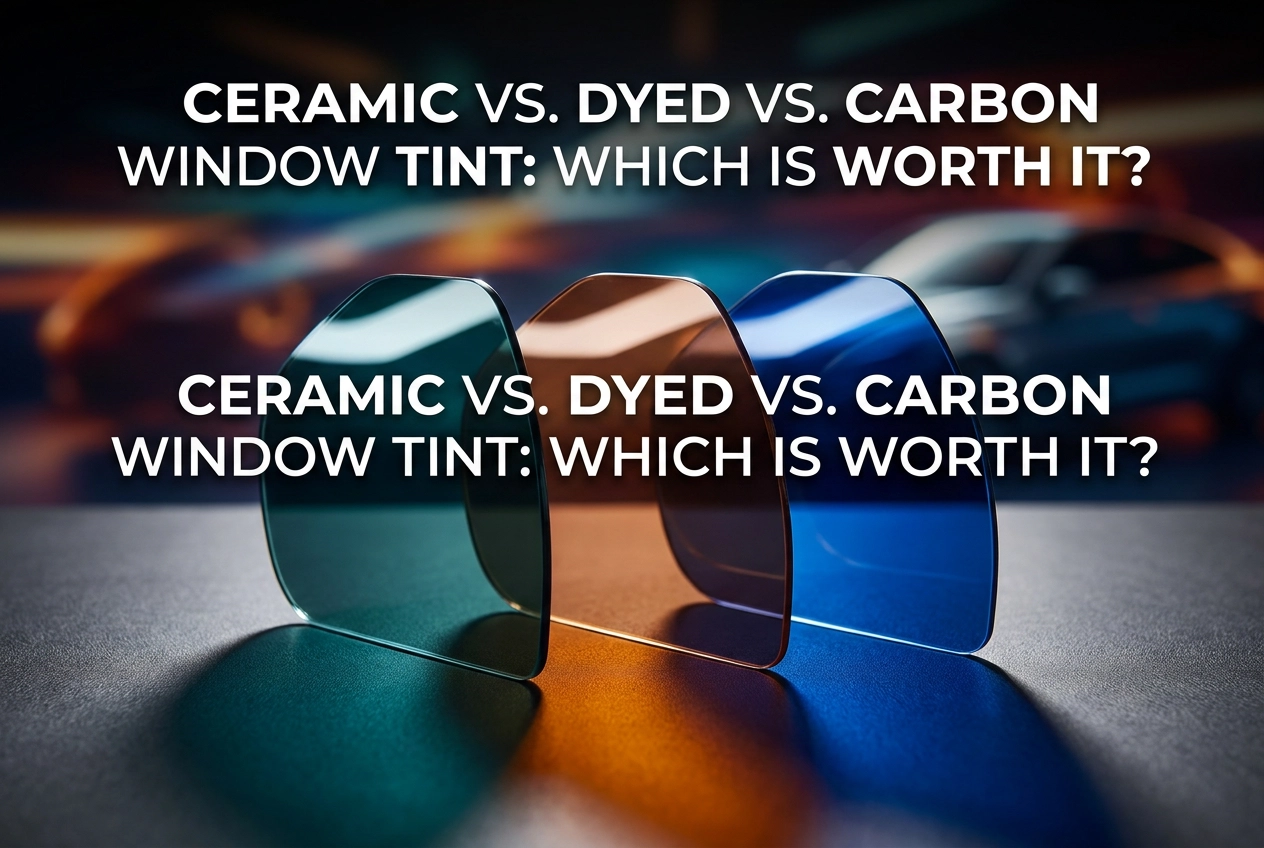
Different materials, different results. Dyed film puts dye in the adhesive, and that dye absorbs light. Carbon film uses carbon particles, so there is no dye layer to fade. Ceramic film uses ceramic particles that reject the most heat while needing less darkening. Three tiers, three price points, three lifespans.
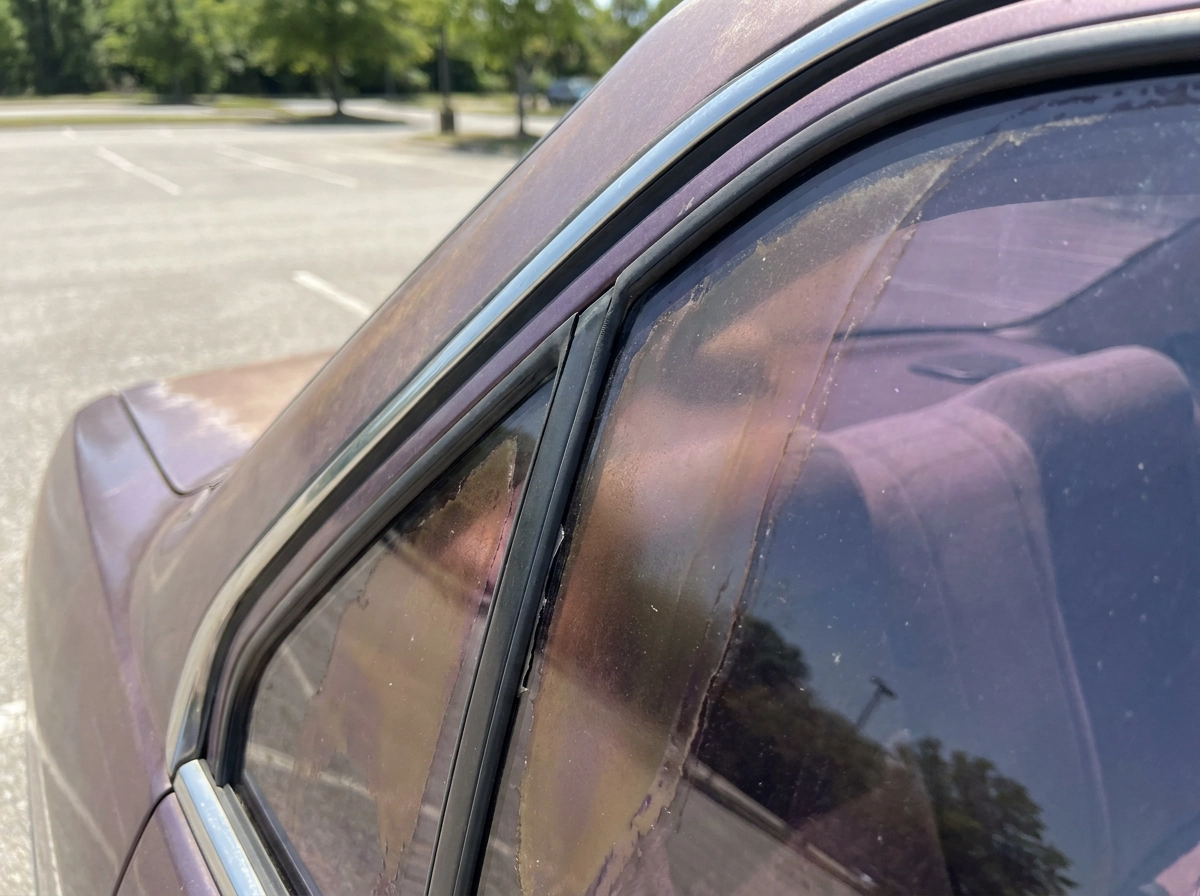
Dyed film is the cheapest way to darken glass. It absorbs light rather than reflecting it, and it is the tier most likely to shift color and break down over time, since the dye doing the darkening is also the layer taking the sun all day. That is the film I see go brown or purple.
Carbon film skips the dye entirely. The carbon particles are the color, so nothing turns purple, and the glass keeps a flat, matte look. It blocks heat by absorbing it, but it will not shed as much total solar energy as a ceramic film in the same shade.
Ceramic film is the newest tier and the most expensive. Ceramic particles reject heat across the infrared range, so you get real heat rejection without going limo dark. If you still want to read the road through your side glass at night, that is the part that matters.
I am not going to quote lab percentages at you. What my years pulling film off Austin cars have shown me is simpler: every tier installs on the same glass, and the difference is what you get for the money and how long it holds up. One thing worth clearing up while we are here: ceramic tint is not ceramic coating. Knowing what ceramic coating actually does is a paint protection conversation, not a glass one.
Which Window Tint Film Handles an Austin Summer When Your Car Sits Outside All Day?
If your car bakes in a lot from 8 to 5, ceramic earns its price because it sheds the most heat with the least darkening. If it sleeps in a garage most days, carbon or even dyed film will feel fine and cost less. Your parking spot, not the shade card, should pick your film.
Film behavior depends on conditions, not just the label. Berkeley Lab's FLEXLAB tested window films across high and low solar angles, which is the same reason my dash is hotter at 4pm than at 9am. Fair warning: that is building research, not a car study. I only use it to show that conditions change results, never to claim ceramic, carbon, or dyed film wins the lab test.
Austin hands you four different heat problems. A west-facing lot at 5pm punishes side glass and the dashboard. A covered garage downtown barely counts as sun exposure. A carport blocks overhead sun but not low evening sun. A truck on a job site sits in it all day.
Match the film to the habit. Outside all day, choose ceramic, and treat it as comfort plus protection for your dash, seats, and interior plastics. A carport car can live happily on carbon. Garage-kept and gone in three years, dyed is a reasonable spend. It is the same logic as how Austin's climate shapes the PPF versus ceramic coating call on your paint. The catch shows up years later, when the cheaper film gives out.
Tell us your make, model, and what you have in mind. We'll give you an exact quote, not a ballpark.
Does Dyed Window Tint Really Fade, and Why Does It Matter?
Parking decides how much heat you feel. It does not save a dyed film from the sun. Yes, dyed film fades, because the dye that darkens your glass is the same layer soaking up light and heat all day. In a Texas summer, it is the film I see go brown or purple first, then bubble at the edges. Carbon and ceramic do not have that dye to lose.
When I pull a faded back glass, the color has already shifted. Next comes the adhesive letting go around the defroster lines. By the time a customer notices, the tint is cloudy from the inside.
That matters because faded film has to come off. Removal is labor on top of the new install, so the cheap film you replace once can cost more than the film you only buy once.
Carbon sidesteps the whole problem. Carbon particles are the color, so there is no dye to degrade under UV. That is why carbon holds its look longer than dyed.
If you flip cars every two or three years and park inside, fading may never catch up with you. Keep a car eight years in Austin sun and dyed film will show its age long before the car does.
Fading is one reason I steer people away from the cheapest film. Glare and signal interference are the other questions I get at the counter. For the wrap side of the same film and installer questions, see our color change wrap buying guide.
What About Glare and Interference From Phones, GPS, and Toll Tags?
Fade is why film comes off. Glare is why people ask about film in the first place. Every film tier cuts some glare, and darker cuts more of it. A lighter ceramic knocks glare down while staying easy to see through at night. Signal interference is a different issue. It comes from metallic film, not ceramic, so ceramic is the safe pick if you run a toll tag or GPS.
Glare shows up by time of day. Morning sun straight through the windshield strip is the complaint I hear most. Low evening sun through the side glass is the second. They are not solved by the same shade on every window, and I have watched people tint only the back glass and still squint at 7pm.
On interference, I am honest. Metallic films are the ones that have caused trouble with toll transponders and reception in my experience. Ceramic is non-metallic. Have the shop test your toll tag and dash cam placement after install rather than guessing.
A very dark dyed film looks great in a parking lot photo and turns side streets into guesswork after dark. Nobody mentions that while you are staring at a shade card.
Your installer should walk you through current Texas visible light transmission limits for each window before you pick a shade. Front side glass rules are stricter than rear glass, and the Texas Transportation Code on window tinting treats them differently. If you are also coating your paint, our ceramic coating care guide for the first 30 days has the aftercare side covered.
So Which Window Tint Film Is Worth the Money for How You Park and How Long You Keep Your Car?
With glare and toll tag interference settled, the last question is value. Here is the whole decision in two questions: does the car sit outside all day, and will you still own it in five years? Two yes answers point to ceramic. A garage at home and a three-year ownership plan make dyed or carbon a reasonable spend instead.
Now the three plain scenarios. Dyed film fits short ownership and covered parking, where you will likely sell before fade shows up. Carbon is the middle ground: nothing in it discolors, and you can live with less total heat rejection than ceramic buys. Ceramic is for the car that bakes on a west-facing lot and stays in the family.
I will not quote tint prices here, since they move. Ask instead for a quote per film tier, then compare the difference against what pulling and replacing a faded film once would cost, labor included. Whichever number is smaller is the honest answer for your car.
Quotes are free, we reply within one business day, every job carries a 12 month craftsmanship warranty, and we are booking two to three weeks out. If you want film on before the worst of summer, start that clock now.
One angle customers forget: if you already protect paint with paint protection film or a color change wrap, matching that logic on the glass is the same idea. Our guide on how to match the right coating tier to how long you are keeping the car walks the same math. And if you want a color change rather than shade, that is a wrap conversation, not tint film.
The Film That Earns Its Price in a Texas Summer
Here is the short version I give at the counter. Darkness tells you how much light gets blocked, not how much heat gets turned away. Those are separate numbers, and the sample card only shows you one of them.
Dyed film is the cheap route, and it is the one I pull off faded and bubbly. Carbon skips the dye, so there is nothing to go purple, though it still rejects less total solar energy than ceramic. Ceramic turns away the most heat with the least darkening, which is why it costs the most.
Your parking spot and your ownership plan pick the tier, not the card. A car under a carport for three years and a truck on a job site for eight are not the same purchase. Answer those two questions out loud and the tier picks itself.
Ask three things before you commit: infrared and total solar energy rejection numbers in writing, Texas visible light transmission limits for each window, and what removal would run if you pick wrong. I would rather answer those up front than see you back in two summers.
Book before the heat peaks. Quotes are free, answers land within one business day, every job carries our 12 month craftsmanship warranty, and we are booking two to three weeks out. If you are weighing long-term protection across the whole car, the same logic shows up in our vehicle wrap vs. paint comparison.
Conclusion
I still see dyed film come in faded and bubbly, which is why I tell folks at the counter to stop shopping by the shade card. Darkness only tells you how much light gets blocked. It does not tell you how much heat gets turned away. Carbon avoids the dye problem, while ceramic rejects the most heat with the least darkening, and that matters when your car sits outside through an Austin summer. The right tier comes down to your parking spot and how long you plan to keep the car. Ask for IR and total solar energy rejection numbers in writing, check Texas VLT limits, and price removal before you commit. Book a free quote before the heat peaks, and we will help you pick the film that earns its price for how you actually drive and park.
Frequently Asked Questions
Does the shade card tell you how well the film handles heat?
No. Darkness and heat rejection are separate things. The shade card shows visible light transmission, which is how much light passes through the glass, not how much heat it turns away. A very dark dyed film can still let heat soak the cabin, while a much lighter ceramic film can turn away more heat. Ask what the film does to infrared and total solar energy instead.
What is the difference between dyed, carbon, and ceramic window tint?
Dyed film puts dye in the adhesive to absorb light and is the cheapest option, but it is the most likely to shift color and break down over time. Carbon film uses carbon particles as its color, so there is no dye layer to fade, and it keeps a flat, matte look. Ceramic film uses ceramic particles that reject the most heat across the infrared range with less darkening, and it is the newest and most expensive tier.
Which window tint is best if my car sits outside all day in Austin?
Ceramic is the choice for a car that sits outside all day, since it sheds the most heat with the least darkening. A car kept in a carport can live well on carbon. A car kept in a garage and sold within about three years can reasonably use dyed film. Your parking spot and how long you keep the car should decide the tier, not the shade card.
Why does dyed window tint fade, and why does that matter?
Dyed film fades because the dye that darkens the glass is the same layer absorbing sun and heat all day. In a Texas summer it tends to turn brown or purple first, then bubble at the edges, and the adhesive can let go around the defroster lines. Faded film has to be removed, which is extra labor on top of the new install, so a cheap film replaced once can cost more than a film bought once. Carbon and ceramic do not have that dye to lose.
Does window tint affect glare, phones, GPS, or toll tags?
Every film tier cuts some glare, and darker film cuts more, but very dark dyed film can make it hard to see at night. Signal interference comes from metallic film, not ceramic, so ceramic is the safe pick if you use a toll tag or GPS. The post recommends having the shop test your toll tag and dash cam placement after installation rather than guessing.