You've probably heard that combining PPF and ceramic coating is the best way to protect your car's paint. And it's true. But here's something most people don't find out until it's too late: the order you apply them matters just as much as having both. Get the sequence wrong, and you're looking at wasted money, a failing film, and a do-over that could have been avoided entirely.
Whether you're protecting a brand-new vehicle or finally giving your current car the treatment it deserves, understanding how PPF and ceramic coating work together is the key to getting the most out of both products. One has to go on before the other, and there's a very specific reason why.
In this guide, we'll walk you through the correct installation order, what actually happens when it's done backwards, and how the two products work together when applied properly. We'll also cover what to do if your car already has a ceramic coating, why you want both installed at the same shop, and exactly what to ask before you book your appointment.
Why the Order Is Non-Negotiable
Paint protection film has a pressure-sensitive adhesive on its backing, and that adhesive is engineered specifically to bond to automotive clear coat. Clear coat has microscopic pores in its surface, and those pores are exactly what the film's adhesive needs to grip. Think of it like velcro at a microscopic level. Clean, bare clear coat gives the film something to grab.
Ceramic coating does the opposite. When it cures, it fills those pores and hardens into a slick, hydrophobic shell that water and contaminants can't penetrate. That's the whole point of combining ceramic coating with paint protection film as a system. But here's the problem: if the ceramic coating goes on first, that sealed surface leaves nothing for PPF's adhesive to bond to. The film ends up sitting on a chemically inert, glass-like layer instead of clear coat.
This is not a matter of using better film, a more skilled installer, or a different brand. No amount of technique fixes a chemistry mismatch. The adhesive simply cannot do its job on a sealed surface.
That's why every professional shop follows the same rule: paint protection film goes on before ceramic coating, every single time. There are no exceptions, no workarounds, and no scenarios where flipping the order makes sense. The industry consensus on this is completely uniform, and it comes down to one straightforward fact: the products were designed to be stacked in a specific direction, and that direction is PPF first.
What Happens If You Get It Backwards
So what actually happens when someone skips the rules and puts PPF over an existing ceramic coating? The short answer: it looks fine on day one, and falls apart fast after that.
The film has nothing real to grip. Instead of bonding to clear coat, it's sitting on top of a slick, sealed surface. That's when the problems start showing up:
- Sliding during installation, the film shifts and won't stay where it's placed
- Edge lifting, corners and edges start peeling within days
- Bubbling, air and moisture get trapped underneath the film
- Full delamination, the film separates entirely, sometimes within weeks
A properly installed PPF and ceramic coating combination is built to last 7 to 10 years. Get the order wrong, and you're looking at failure in days or weeks instead.
The financial hit is worse than most people expect. You're not just out the cost of the original PPF installation. You also pay for removal, which isn't cheap, and then you pay for a correct reinstall on top of that. One mistake turns into two full jobs.
The warranty situation makes it even worse. Film and coating warranties generally don't cover failures caused by improper installation, so you may have little recourse with either brand.
It's worth noting this same logic applies to any long-term film product. If you've ever wondered which lasts longer between color PPF and vinyl wrap, proper prep and sequencing affects both.
The Right Way to Do It: The Three-Stage Process
So now you know what goes wrong. Here's what going right actually looks like.
Professional installers follow a straightforward three-stage process, and each stage exists for a reason.
Stage 1: Decontamination
Before anything touches your car, the paint gets a thorough cleaning. That means a full wash, a clay bar treatment to pull out embedded contaminants, and paint correction if there are swirl marks or surface defects that need addressing. PPF's adhesive bonds directly to your clear coat, so that surface needs to be clean, smooth, and free of anything that could interfere with the grip. Skipping this step is like painting over a dirty wall.
Stage 2: PPF Installation
Once the surface is ready, the paint protection film goes on. The installer applies the film, squeegees out air and moisture, and then the car sits. The film needs time to properly tack down before anything else happens. Rushing this step is not an option. If you're curious how this works for specialty finishes, Color PPF installation follows the same disciplined prep and application process.
Stage 3: Ceramic Coating Application and Cure
After the film is fully settled, the ceramic coating goes on top. It bonds to the film's topcoat, not directly to your paint. From there, the coating needs to fully cure before the car sees water, rain, or any contaminants. No early car washes, no shortcuts on the cure window.
Each stage sets up the next. Pull one out and the whole stack is compromised.
Tell us your make, model, and what you have in mind. We'll give you an exact quote, not a ballpark.
What Ceramic Coating Over PPF Actually Does for You
So now that you know the correct process, here's why it's actually worth doing both.
When ceramic coating goes over properly installed PPF, you get the best of both products working together. The film handles the heavy stuff: rock chips, road debris, light scratches, and physical impacts. The coating handles the surface: repelling water, dirt, and contaminants so they slide off instead of sticking. Neither product does both jobs alone. Together, they cover everything.
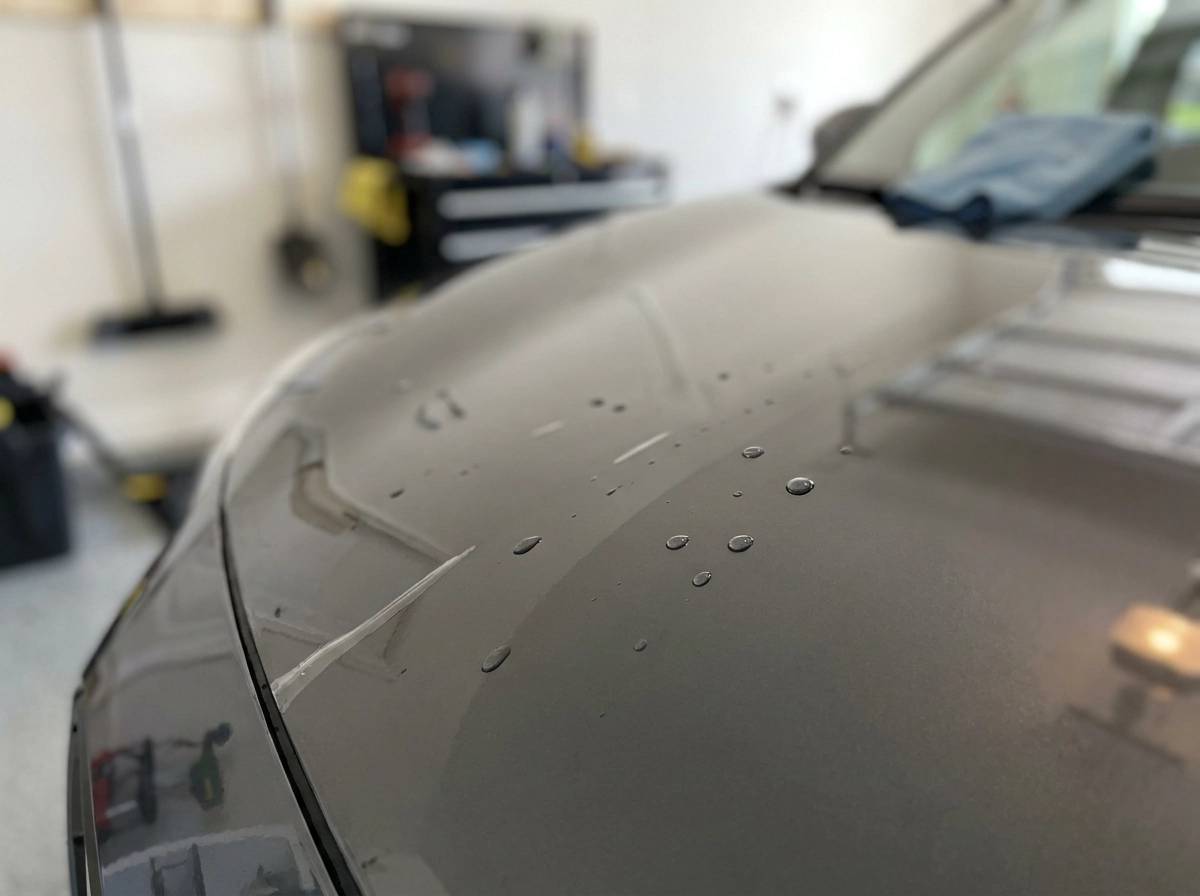
The coating also works with the film's self-healing properties rather than against them. Most quality PPF can recover from light surface scratches on its own, especially with heat. A ceramic coating on top keeps the surface slick enough that you're getting fewer of those scratches in the first place, which means less work for the film's self-healing to do.
The day-to-day maintenance difference is real. Water beads up and sheets off. Bird droppings, road grime, and bug splatter don't bond to the surface the way they would on bare paint or uncoated film. Your washes take less time and less effort, and you're not scrubbing as hard to get the car clean.
UV protection stacks too. PPF already blocks a significant amount of UV exposure, which helps keep your paint from fading. The ceramic coating adds another layer of UV resistance on top, which helps the film itself stay clear and resist yellowing over time. To dig deeper into what ceramic coating actually does on its own, our guide to whether ceramic coating is worth it is worth a read.
Done right, this combination extends how long your PPF performs and cuts down the maintenance you need to put in over the years.
What If Your Car Already Has Ceramic Coating?
All of that sounds great if you're starting fresh. But what if your car already has a ceramic coating on it?
This comes up a lot, especially with pre-owned vehicles or cars that went to a different shop for ceramic coating before the owner decided to add PPF. The good news: it's fixable. The not-so-great news: it costs extra time and money.
The coating has to come off first. There's no workaround here. If you want PPF on a panel that's already been ceramic coated, that coating needs to be removed before the film goes on. Full stop.
There are two ways to handle it:
- Light paint correction (machine polishing): A finishing pad and compound can break down the ceramic layer without damaging the paint underneath.
- Chemical stripping: A dedicated coating remover applied to the affected panels strips the coating chemically, which is sometimes cleaner depending on the product that was used.
A good shop will assess which method makes sense for your specific situation.
Partial coverage is manageable too. If only certain panels were coated, only those panels need the prep work. You don't have to redo the whole car, just the areas targeted for PPF.
This is exactly the kind of extra step that disappears when you run both services together from the start, with one shop, in the right order. Planning ahead keeps the process straightforward and your budget predictable.
Why You Want Both Done at the Same Shop
That pre-owned car scenario makes a strong case on its own. But even on a brand-new vehicle, splitting this job between two shops creates a problem that's easy to avoid and painful if you don't.
When two different shops handle PPF and ceramic coating, there's no guarantee they're using compatible products or following the same sequence. Shop A does the film. Shop B adds the coating. Neither one knows exactly what the other used, how long the cure window actually ran, or whether the prep met the same standard. That gap is where failures happen.
And when something does fail, both shops have an easy out. Shop A says the coating compromised the film. Shop B says the film was installed wrong. You're stuck in the middle with no clear path to getting it fixed, and no one is eager to take the hit.
A single shop controls everything: the decontamination, the film install, the coating application, and the cure timing between each stage. Nothing falls through the cracks because there are no handoffs.
Product compatibility matters here too. Ceramic coatings like Armour PRO Quartz and films from brands like 3M, Avery Dennison, and KPMF are professional-grade products, and a shop that installs both can pair a coating and film that work well together.
On top of that, film and coating warranties generally depend on proper installation, so having one experienced installer handle both products keeps things simpler if you ever need to make a claim. Same-shop installation isn't just more convenient; it's the move that protects your coverage.
For more on how materials and installation quality affect long-term durability, check out more from the blog.
What to Confirm Before You Book
So you know the right shop matters. Here are the questions to ask before you commit.
1. Do they install both products, and do they coordinate the workflow? Some shops do PPF. Some do ceramic coating. Fewer do both in a properly sequenced, single workflow. Ask directly. If they send you somewhere else for one of the products, that is a red flag.
2. Do they follow the correct sequence and respect cure windows? Decontamination first, PPF second, ceramic coating third. No skipping steps, no rushing the cure windows between stages. If a shop cannot clearly explain this process when you ask, keep looking.
3. What products are they using? Professional-grade ceramic coatings and name-brand films bond better and last longer than cheaper alternatives. It is not just a marketing point. Ask what they use and why. A shop that knows their products will answer without hesitation.
4. What does the warranty cover? Get specific. How long does it last? What voids it? Does coverage require both products to have been installed by the same shop in the correct order? Warranty details tell you a lot about how confident a shop is in their own work.
5. Does your car already have a ceramic coating? Flag it before you book. Prior ceramic coating work may require removal and paint correction before the paint protection film service can start. Mentioning it upfront lets the shop assess what prep is actually needed so there are no surprises on the day.
The Bottom Line
Once you've asked those questions and you're confident in the answers, you're in good shape. Here's the short version of everything covered in this guide.
PPF and ceramic coating together is the best paint protection you can put on a car. But "together" only works when the sequence is right. PPF goes on first, always. Ceramic coating follows after the film has settled and cured. That order is not flexible.
If your car already has a ceramic coating on it, that's not a dealbreaker. It just means the coating needs to come off the targeted panels before the film goes on. Proper prep first, then the correct stack. No shortcuts.
Book both services with one shop. Confirm the sequence upfront. Ask about the warranty before you hand over your keys.
At Wrapt Auto Styling in Leander, serving the Austin area, both products are installed in the correct order, in one coordinated workflow, using professional-grade products including Armour PRO Quartz ceramic coating and trusted film brands. The work is backed by a warranty, and we're happy to walk you through exactly what it covers.
Get a free quote today. Wrapt responds within one business day.
Conclusion
Paint protection done right comes down to two things: the right products and the right order. PPF goes on first to shield your paint from physical damage. Ceramic coating follows to lock in gloss, repel contaminants, and protect the film itself. Skip a step or reverse the sequence, and you lose the benefits of both.
The good news is that getting this right is straightforward when you work with a shop that knows what they are doing and does both services under one roof.
At Wrapt Auto Styling in Leander, serving the Austin area, the process is handled correctly from start to finish, backed by a warranty and completed with professional-grade products. Your paint deserves that level of protection.
Ready to protect your investment the right way? Get your free quote from Wrapt today. Responses come within one business day, and proper protection starts with one simple conversation.
Frequently Asked Questions
What happens if I apply ceramic coating before paint protection film?
Applying ceramic coating before PPF creates a chemistry mismatch that causes failure. The ceramic coating seals the clear coat's microscopic pores, leaving nothing for the PPF's pressure-sensitive adhesive to bond to. This results in the film sliding during installation, edges lifting within days, bubbling underneath, and complete delamination within weeks. You'll also void manufacturer warranties and end up paying for removal and reinstallation on top of the original costs.
Can I get PPF installed at one shop and ceramic coating at another?
While technically possible, this approach is not recommended. When two different shops handle these services, there's no guarantee they're using compatible products, following the correct sequence, or respecting proper cure windows. If something fails, both shops can blame each other with no clear responsibility for fixing it. Additionally, manufacturer warranties are often tied to having both products installed by the same accredited installer in the correct order, so splitting the work could void your coverage.
What is the correct three-stage installation process for PPF and ceramic coating?
The correct process is: Stage 1 - Decontamination (full wash, clay bar treatment, and paint correction to ensure clean, smooth clear coat), Stage 2 - PPF Installation (apply film, squeegee out air and moisture, then allow proper tack-down time), and Stage 3 - Ceramic Coating Application (apply coating after film has fully settled and cured, then allow full cure time before water exposure). Each stage prepares the surface for the next, and skipping any step compromises the entire protection system.
What should I do if my car already has ceramic coating and I want to add PPF?
The existing ceramic coating must be removed from the panels where you want to install PPF. There are two removal methods: light paint correction using machine polishing with a finishing pad and compound, or chemical stripping with a dedicated coating remover. A professional shop will assess which method is best for your specific situation. If only certain panels were ceramic coated, only those panels need the removal process before PPF installation.
What specific questions should I ask a shop before booking PPF and ceramic coating?
Ask these five key questions: (1) Do they install both products with a properly coordinated workflow, or will they send you elsewhere? (2) Do they follow the correct sequence (decontamination, PPF, ceramic coating) and respect cure windows? (3) What professional-grade products do they use and why? (4) What does the warranty cover, how long does it last, and what could void it? (5) Does your car already have ceramic coating (flag this upfront to avoid prep surprises). Clear, confident answers to these questions indicate a shop that knows what they're doing.