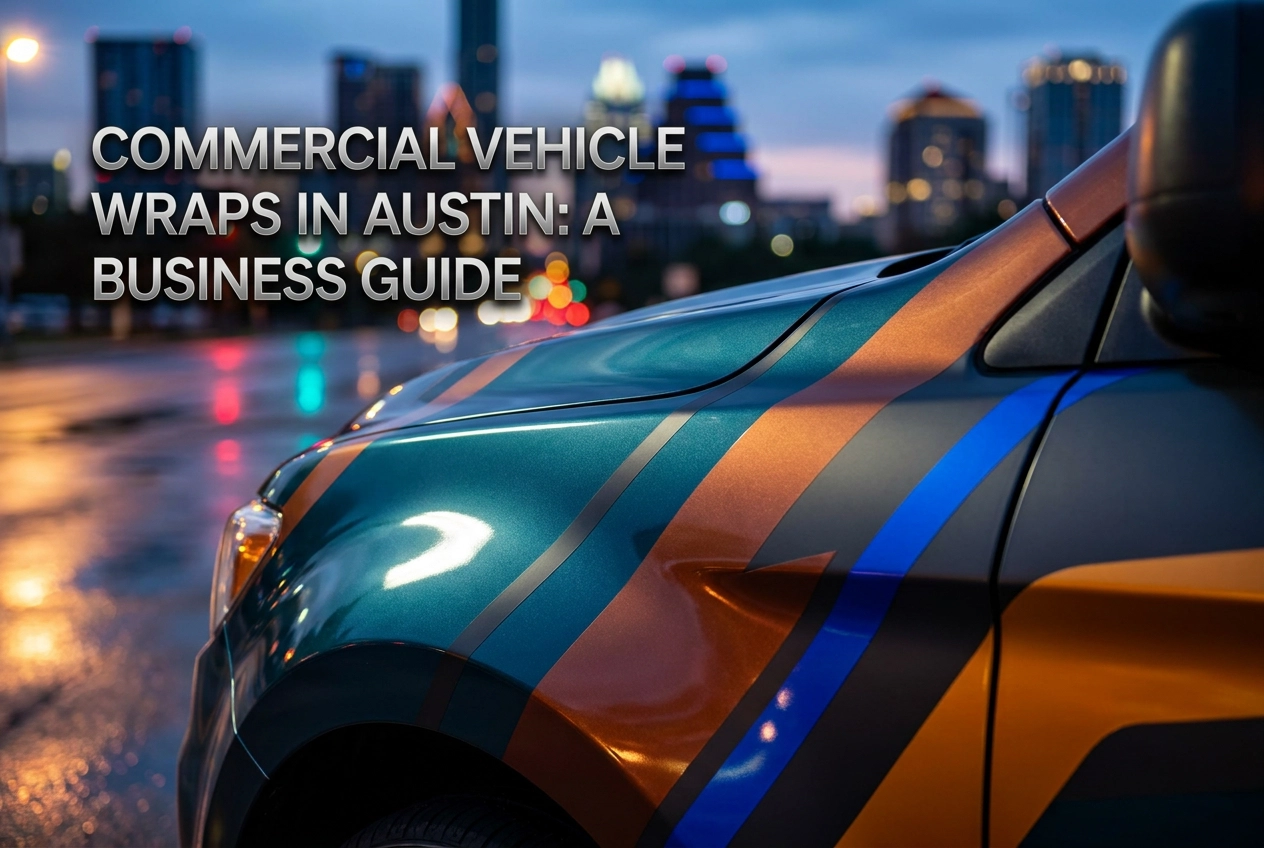
If your Austin business depends on vehicles, every mile is a moving billboard. A well-planned commercial vehicle wrap turns that daily mileage into durable brand exposure, but the wrong material, coverage, or finish can cost more than it returns. This guide cuts through the guesswork for fleet managers, service owners, and marketing leads who need practical answers, not sales pitches.
You will learn what a commercial wrap actually does for an Austin business, how printed wraps compare with color change wraps, and what projects typically cost in this market. We break down partial versus full van coverage, finish limitations fleet buyers should know before signing off, and the full wrap process from consultation to installation. You will also see why Austin businesses choose Wrapt Auto Styling, how we serve the surrounding metro, and which questions to ask before hiring a local shop. If you have searched for a commercial vehicle wrap near me and found vague pricing or conflicting advice, this guide gives you a clear framework. We also cover common FAQs and next steps, so you can evaluate options, ask better questions, and move your fleet toward a wrap that performs.
What a Commercial Vehicle Wrap Does for an Austin Business
A commercial wrap turns every truck, van, and sedan into moving signage on I-35, MoPac, US-183, and SH-71, earning daily exposure without recurring ad spend. Printed and laminated film also shields factory paint, which helps at lease turn-in and protects resale value on owned units.
Texas runs on pickups and work vans, the same vehicles that carry your brand across every job site and highway corridor.
Vinyl is reversible: rebrand with new graphics or return to factory color faster and cheaper than repainting. Fleet consistency matters too. When one shop installs the same film and print profile across 6, 12, or 20 vehicles, the fleet reads as one company. Wraps also quiet mismatched door logos, dealer decals, and faded remnants. If you're comparing wrap to paint, our vehicle wrap vs paint guide explains the tradeoffs.
Commercial Printed Wraps vs Color Change Wraps
Decide what the wrap must do: communicate or look a certain way.
- Printed and laminated commercial wraps are built for graphics. Cast vinyl plus a clear overlaminate shields ink from UV, road grime, and wash cycles. Premium wraps last about 5 to 7 years with proper maintenance. Choose these when the vehicle must carry your company name, service list, phone number, website, license detail, QR code, or USDOT markings under 49 CFR 390.21.
- Color change wraps are single-color films for a clean palette or custom look. They are not the right product for phone numbers, DOT lettering, or detailed logos. Choose color change when the vehicle needs to look a certain way, such as a matte black work truck matching your fleet.
- Color PPF pairs paint protection with color in one investment. See our color PPF page for details.
Many fleets combine both: a color change base with printed panels or an accent band, keeping visual language consistent while carrying contact information.
What Commercial Vehicle Wraps Cost in Austin
Now that you know which film type fits the job, here is what it costs in Austin. At Wrapt Auto Styling, service van wraps run about $2,500 for partial coverage to $5,500 for a full wrap. A full color change wrap on a sedan starts at $3,200. Your written quote sets the final price.
Vehicle size and panel count drive most of the spread. A high-roof Sprinter-style van carries far more square footage, more compound curves, and more removal-and-reinstall labor than a Transit Connect. Coverage level changes price as much as size: doors-only branding, a partial wrap with rear and hood, and a full wrap including the roof sit at three different price points.
On color change, matte, satin, and gloss films cost about the same. Specialty films and textured finishes cost more. On printed work, flat text and simple logos print efficiently; gradients, photographic imagery, die-cut logos, and heavy lamination drive material and labor up.
Install complexity is often underestimated. Rivets, deep recesses, roof racks, ladder racks, shelving, and existing dents or peeling clear coat all add prep and install time. Quotes are free and returned within one business day. Lead times vary by season, so schedule before a busy season or renewal date.
Partial vs Full Van Wraps: Which Coverage Fits Your Routes
Next, decide how much of the van the film should cover.
- Partial wraps cover front/rear doors, sometimes hood or lower rocker strip. A strong entry point for small service businesses seeking professional brand presence without full-vehicle investment.
- Full wraps cover the entire body including the roof. On tall vans and box trucks, roof coverage is not wasted: pedestrians, second-story windows, elevated highways can see it.
- Match coverage to route mix. A van parked daily at job sites in dense neighborhoods benefits from side panels; a highway-heavy route favors rear graphics readable at distance, in traffic.
- Plan for fleet growth. Partial coverage can expand later, but matching film batch and print color across model years is difficult. If adding vehicles, wrap all at once.
- Check lease terms first. On leased vans, confirm how installation and removal affect your lease, especially with hardware or antenna mounting.
- Request a coverage matrix for multi-vehicle fleets, assigning partial or full treatment by vehicle type so a mixed fleet looks intentional.
Ready to plan routes? Request a free quote.
Finish Limitations Fleet Buyers Should Know Before Signing Off
Before you sign off on coverage, understand how finishes behave on a working vehicle. Satin and matte films are harder to keep clean day to day than gloss, and a deep scratch usually means replacing the film on that panel rather than spot-repairing it. Gloss, satin, and matte vinyl also react differently to automated brush car washes; hand washing with pH-neutral soap and soft mitts is safest.
Durability is not abuse resistance. A wrap shields paint from sun and minor abrasion, but it will not survive a loading dock scrape or forklift contact. Wrapt Auto does not perform rock chip repair, so address body damage and failing paint first. Film over an unstable surface will lift.
Tell drivers plainly: surface contamination and gradual fading are normal wear on a daily-work vehicle, not film failure. Report any lifting edge early so it can be checked under the craftsmanship warranty. Budget a replacement horizon too: printed and laminated wraps at 5 to 7 years, color change wraps at 3 to 5 years. Have more questions? The FAQs section below covers the rest.
Tell us your make, model, and what you have in mind. We'll give you an exact quote, not a ballpark.
How the Wrap Process Works, Start to Finish
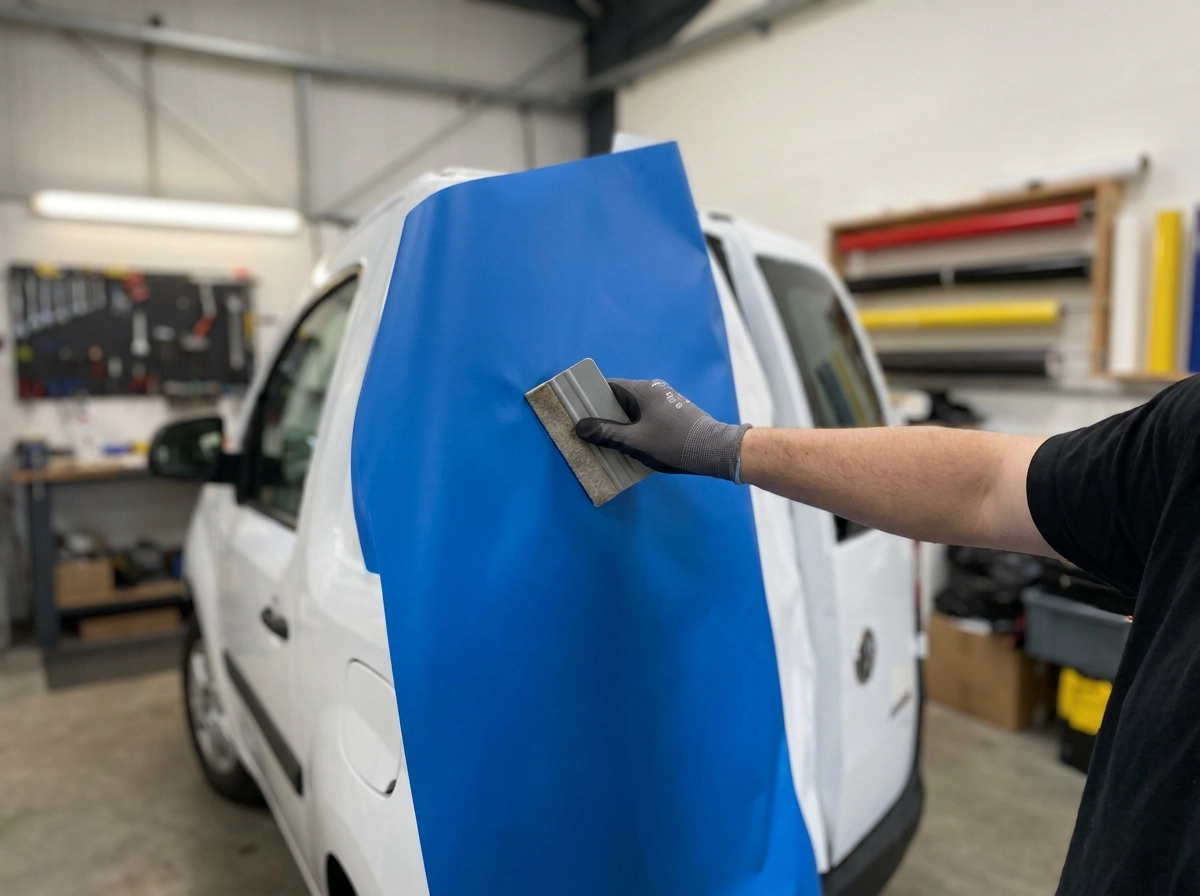
Once you have signed off on finish and budget, here is how a commercial wrap moves from quote to road.
- Consultation and quote: Send photos plus logo files. You get a written estimate within one business day. Free.
- Design and proofing: Graphics laid out on the actual vehicle template. Colors checked against your brand guide. Film options shown as real samples, not screen renders.
- Surface prep: Vehicle washed, decontaminated, inspected. Paint correction where needed. Film bonds best to clean, intact, fully cured paint. Thorough prep is what protects adhesion long-term.
- Installation: Controlled bay. After install, post-heating and edge sealing lock film around door frames, wheel arches, mirror pockets.
- Cure and aftercare: Wait before first wash. Hand wash guidance provided so drivers do not shorten film life in month one.
- Warranty: Every job covered by 12-month craftsmanship warranty for installation defects. A lifting edge or trapped air pocket becomes a service call, not a new expense.
Why Austin Businesses Choose Wrapt Auto Styling
That process is backed by a local team you can reach for warranty work. Wrapt Auto Styling is a locally owned shop in Leander, founded by Michael Proctor, with 10+ years in the industry and 1,000+ vehicles installed. The shop holds Avery Dennison, KPMF, and Orafol certifications and also installs 3M, so film is chosen for your job, not shelf stock.
Color PPF is a specialty: 3M PWF, Cheetah PPC, SVG, GSWF, Platinum Wrapping Film Performance Line, Pure PPF, and Inozetek. That gives owners protection and color in one product. The same 12-month craftsmanship warranty applies here, and rock chip repair remains outside scope.
One shop handles your full appearance program: commercial and fleet wraps, color change wraps, chrome delete, paint protection film, ceramic coating (Armour PRO Quartz), window tint, and detailing with paint correction. Free quotes, one-business-day response, and a 2–3 week lead time let fleets plan ahead. If you searched commercial vehicle wrap near me in Austin, this is the local team to call.
Serving Austin and the Surrounding Metro
That local focus extends across the metro. Wrapt Auto serves the full Austin metro, including Round Rock, Cedar Park, Pflugerville, Georgetown, Leander, Kyle, Buda, and Lakeway, so most businesses can drop a vehicle and return to work the same day. The Austin metro's mix of construction, tech, trades, and service businesses means commercial vehicles are on the road constantly, and every mile is potential brand exposure. For multi-vehicle jobs, installation is scheduled in waves, so you never lose your entire fleet at once. Local proximity matters for warranty work. A nearby shop can fix a lifting edge in an afternoon; an out-of-town installer turns that into a two-day disruption. A written quote and clear lead time help fleet managers plan around route coverage, seasonal peaks, and vehicle turnover. Request your free quote today; response within one business day.
Questions to Ask Before Hiring a Local Wrap Shop
Local proximity gets you a quick fix, but vet the shop itself before you commit. Ask six questions:
- Which film brands do you carry, and are you certified by those manufacturers? Certification programs vary by manufacturer; ask the shop to show you their current credentials and check whether those credentials affect the film's material warranty. See our certifications in the section above.
- Is the quote written and itemized? It must state coverage area, film type, and finish. Vague quotes are where budget overruns start.
- What does the workmanship warranty cover, and for how long? Ask about lifting edges, seams, and bubbling, which are installation issues rather than film defects. Ours covers 12 months on craftsmanship.
- How is the vehicle prepped, and what if the paint is failing, peeling, or previously repaired? Instability under the film shows up within months.
- What is your lead time? Lead times vary; ours are currently 2–3 weeks.
- Do you handle print design in-house? If not, you need a separate designer for logos and brand assets, which adds cost and delay.
Get a free commercial vehicle wrap quote and answers to all six within one business day.
Commercial Vehicle Wrap FAQs
- How long do commercial vehicle wraps last? Printed and laminated wraps: ~5–7 years; color change: ~3–5 years; color PPF: ~7–10 years. (Full breakdown in the Finish Limitations section.)
- Will a wrap damage my paint? On intact factory paint, no. Film is designed to be removed, and it typically protects paint from sun and light abrasion while installed.
- Can I wrap a leased van or truck? Usually yes, but check the lease agreement for language about aftermarket film and removal at turn-in.
- How long does installation take? Most single vehicles are completed in one to three days at our shop, depending on coverage and size. Multi-vehicle fleets are scheduled in phases.
- Do you repair dents or rock chips before wrapping? No. As noted in the Finish Limitations section, complete any body or paint repair before scheduling.
- Do you provide fleet quotes? Yes, free and returned within one business day.
Ready to price your fleet? Send photos and logo files for a free quote in Austin.
Next Steps for Your Austin Fleet
With those answers settled, five steps remain.
- Decide what the wrap must do. Printed graphics communicate, color change alters appearance, and color PPF adds protected color. That choice sets the film, the price, and the lifespan.
- Budget with real numbers: see the Cost section for van and sedan starting prices.
- Plan a refresh cycle using the lifespans in the Finish Limitations section.
- Inspect paint and body first; rock chip and dent repair is outside scope.
- Request your free quote****. Send photos and logo files. Expect a written quote within one business day, then schedule around your slowest week.
Conclusion
A commercial vehicle wrap is more than graphics. It turns every Austin route into a moving introduction to your brand, while also protecting paint and supporting fleet consistency. Choose the right film type, plan your refresh cycle, and address any paint issues first. The Cost, Finish Limitations, and Process sections cover the details. Your vehicles already cover miles across Austin. Make each mile work harder for your business.