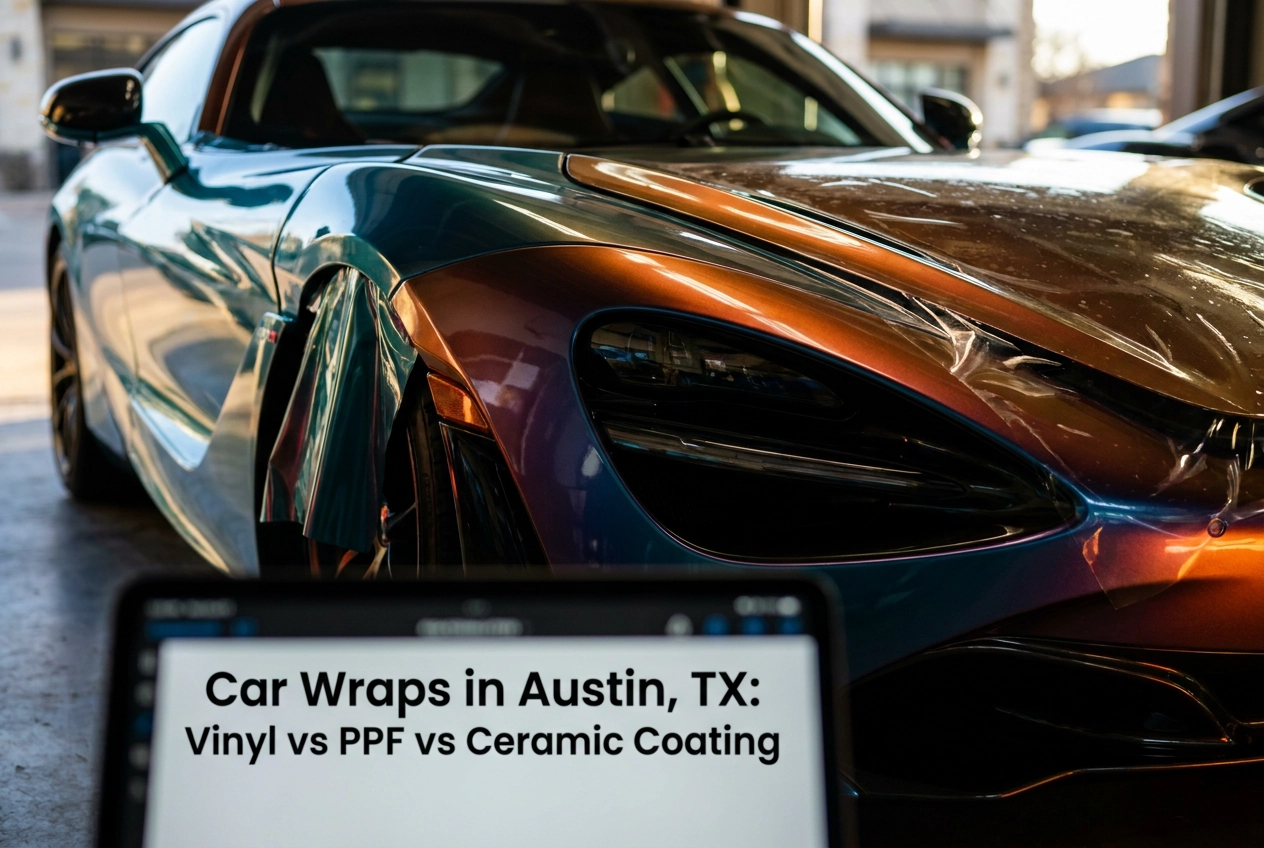
So you want your car to look sharper, stay protected, or both? If you're searching for car wraps in Austin, Texas, you've probably seen three terms: vinyl, paint protection film (PPF), and ceramic coating. They sound similar, but they do very different jobs. Vinyl changes your car's color or finish. PPF shields paint from rock chips and scratches. Ceramic coating adds gloss and makes washing easier, but it is not a wrap. In this beginner-friendly guide, we'll compare all three, plus a repaint, so you can choose with confidence.
We'll cover which option is right for your car, the car wrap options we install in Austin, what car wraps cost in Austin, why we specialize in color PPF, and what to know about matte and satin finishes. You'll also learn about film brands, certifications, and warranty, get answers in our car wrap FAQ for Austin drivers, and find your next step with a free Austin wrap quote. Let's clear up the confusion.
Which Option Is Right for Your Car?
Four realistic paths exist for an Austin driver, and they are not interchangeable. Here's how they stack up on upfront cost, lifespan, upkeep, and reversibility.
Color change vinyl wrap. In our experience, these last 3 to 5 years with proper care. It's fully reversible without damaging the factory finish, and it protects the original paint from sun and light road debris. Middle-of-the-road cost, easy upkeep with hand washing, and this is the option most people mean when they search for car wraps.
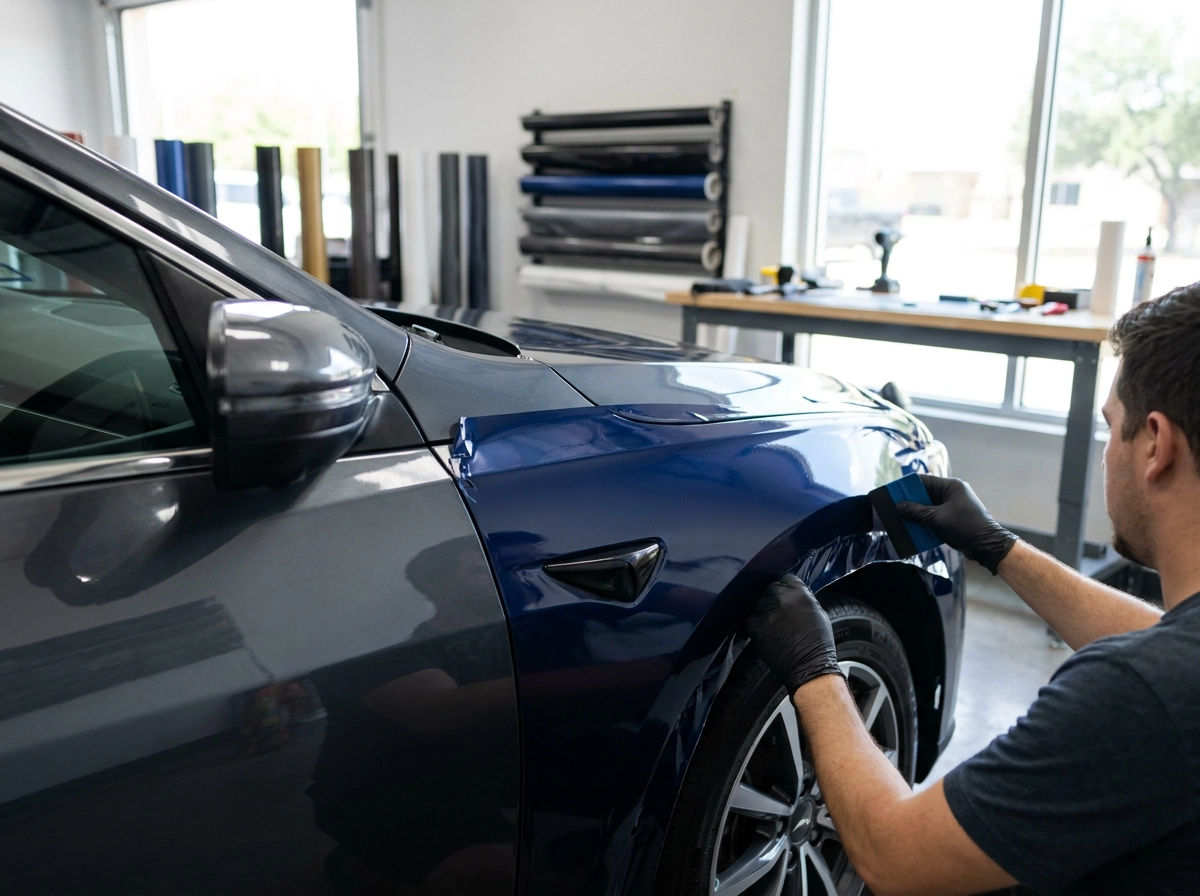
Color paint protection film. A thicker film with a color layer that we see lasting 7 to 10 years. Always bulk installed rather than pre-cut. It changes the color and adds physical protection, making it the strongest fit for daily drivers and newer vehicles. Higher upfront cost than vinyl, longest lifespan, minimal upkeep. Still deciding between color PPF and a standard wrap? Color PPF vs. wrap: your questions answered.
Ceramic coating. A chemical layer applied over your existing paint or over a wrap or PPF. It boosts gloss, water beading, and washability, but on its own it does not change color and is not designed to stop rock chips. Treat it as an upgrade, not a substitute.
Repaint. The only option that permanently alters the surface, so reversibility is off the table. Matte and satin paint are very hard to maintain, and a single scratch or mark usually means repainting an entire panel, sometimes more when the color match is poor.
Car Wrap Options We Install in Austin
Once you know which category fits your car, here is what we actually install in Austin.
Color change wraps come in gloss, satin, matte, metallic, and specialty finishes. We are certified by Avery Dennison, KPMF, and Orafol for vinyl and also install 3M films, so you pick from brands with published film warranties, not an unnamed roll.
Commercial and fleet wraps are printed and laminated, last 5 to 7 years, and make sense when the goal is branding rather than style. A service van typically runs about $2,500 partial and about $5,500 full, with design, door logos, and multi-vehicle consistency handled as one project.
Chrome delete covers window trim, grilles, and badges. It is a small, high-impact job that changes the look for a fraction of a full wrap and pairs naturally with a color change.
Paint protection film, color PPF, and window tint round out the protection side. PPF and color PPF are preventive products, and we are upfront: we do not do rock chip repair. If your paint already has chips, PPF can go over existing chips, but it will not fill them in or repair them.
Ceramic coating with Armour PRO Quartz, plus detailing and paint correction, finishes the list. Correction prepares the surface before film or coating goes on, which is why we treat it as part of the job rather than an add-on pitch. Still weighing options? The FAQ below covers the common ones.
What Car Wraps Cost in Austin
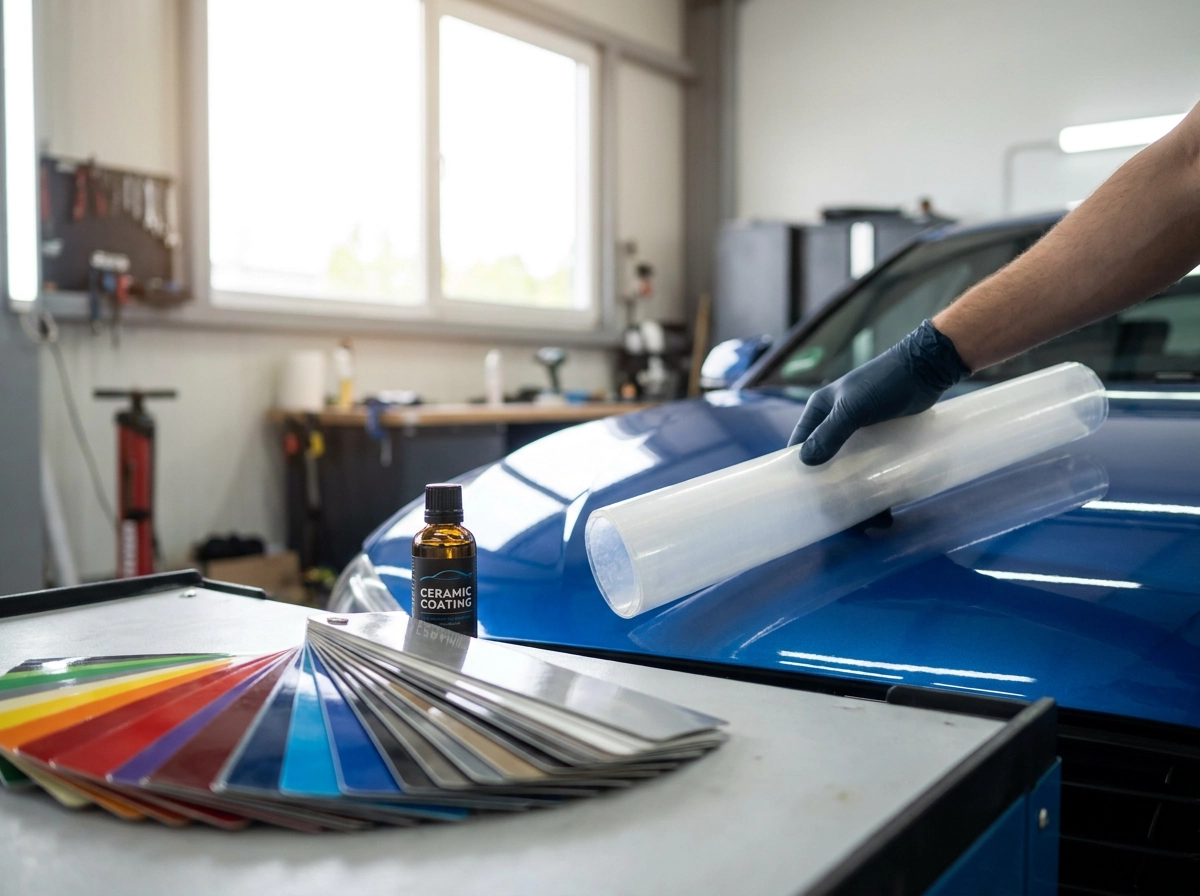
So what does all this actually cost? A full color change wrap on a sedan starts at $3,200. That covers a straightforward, single-color install with standard disassembly, not a teaser number that doubles once you pick a finish.
Here is what surprises people: matte, satin, and gloss films cost about the same. There is no budget finish and no premium one in that group. Specialty films are the exception. Heavy metallics, color-shift, chrome, and textured finishes cost more because the material costs more and the install takes longer.
Service vans work differently. Plan on about $2,500 for a partial wrap (doors, rear panel, a logo or two) and about $5,500 for full coverage. Partial is the common pick for a single work vehicle; full coverage makes sense for a branded fleet where every square foot is a moving billboard.
What actually moves your price? Vehicle size and body complexity, how much trim and lighting comes off, film brand and quality tier, printed and laminated artwork versus solid color, and whether old film has to be removed first. An SUV or truck with heavy cladding sits above the sedan starting price.
Quoting is free, and we respond within one business day. We are booking about 2 to 3 weeks out, so start the quote before you lock in a schedule. For a look at finishes on older metal, see how vinyl stripes transformed a classic Mustang in Austin.
Tell us your make, model, and what you have in mind. We'll give you an exact quote, not a ballpark.
Why We Specialize in Color PPF
If price is what you're weighing, here's where the extra money goes. Color PPF does double duty, it changes your color and adds protective thickness, and in our experience lasts 7 to 10 years, so the math often favors it over the long run. Our color PPF page explains what it is and how it's built.
Bulk installed, every time
Every color PPF job we do is bulk installed. The film goes on as a large sheet over the panel and is trimmed on the vehicle, not machine-cut to panel shapes in advance. That reduces seams and pulls edges around curves and recesses far more cleanly, which is where cheap installs show their age first.
We carry seven color PPF brands, ask for the specific product line in your written quote.
Built for Austin roads
It suits Austin driving. Long highway commutes, intense UV, and constant small road debris are what PPF is built for. Be clear on the limits: in our experience, PPF manages chips, scuffs, and light abrasion. It is not a substitute for collision repair and will not fix existing paint damage.
Best candidates: leased cars you want to return in factory color, new vehicles where the owner wants protection from day one, and anyone who wants a non-factory color that holds up for years.
Matte and Satin: What to Know Before You Choose
Color PPF is the long-haul play, but matte and satin ask a different question: how will you live with the car? Either finish comes in film or paint, and in film they cost about the same as gloss. The real difference shows up after the install.
Painted matte and satin are genuinely hard to own, any scratch or mark typically means repainting the entire panel, and matching a factory matte finish is not guaranteed.
Wrapped versions are far more forgiving because the film is replaceable. A damaged section comes off and gets re-wrapped instead of repainted, which is why many enthusiasts choose film over paint here. Satin is a good middle ground between flat matte and full gloss.
Care rules do not budge: hand wash, avoid automatic brush car washes, and park away from sprinklers. The fundamentals have not changed.
So the pre-qualification is simple. If you are not willing to hand wash the car or pay someone who will, gloss is safer. Five minutes of honesty before the install prevents a lot of disappointment after it.
Film Brands, Certifications, and Warranty
Finish is settled. Now for the part that decides whether the film holds up: who makes it, who is certified to install it, and what happens if it fails.
We are certified by Avery Dennison, KPMF, and Orafol for vinyl wraps and also install 3M. Certification is not a wall sticker: it signals training on those films. Certification matters when a material warranty claim is filed, many manufacturers require an approved installer, so confirm the terms with the manufacturer before you buy.
Color PPF brands are available on request. Ask for the brand and product line in your written quote. A shop that will not name the film is worth questioning.
Every job carries a 12-month craftsmanship warranty on our installation, separate from the film manufacturer's material warranty. Ask about both. One covers install defects like lifting edges or bubbles; the other covers the film itself.
Lifespan numbers to hold us and any other Austin shop to: 3 to 5 years for a color change wrap, 5 to 7 years for a printed and laminated commercial wrap, and 7 to 10 years for color PPF. Treat these as experience-based expectations, not guarantees; parking, sun, and wash habits change the outcome.
When comparing shops, ask: Which brands do you install? How long have you installed them? What does your workmanship warranty cover, and for how long? Do you remove old film, and is that priced in? Answering all four in writing is the Wrapt difference.
Car Wrap FAQ for Austin Drivers
Beyond brands and warranty, here is what Austin drivers ask most.
How long does a car wrap last in Austin? Color change wraps: 3–5 years. Commercial/fleet: 5–7 years. Color PPF: 7–10 years. All figures assume proper care; Austin's sun and uncovered parking shorten them.
Does a color change need to be reported for Texas registration or title? We do not give legal or DMV advice. Confirm current requirements with the Texas DMV and check with your insurance carrier before you wrap, especially if the color change is dramatic.
How far out are you booked, and how fast do I get a quote? Free quotes, one-business-day response, we're booking about 2–3 weeks out.
Can you repair rock chips? No, we install PPF to prevent new chips, not to fill existing ones.
Can I wrap a leased vehicle? Usually yes. Vinyl wraps are designed to be removed without damaging factory paint, that is the core reason they suit leased vehicles, but read your lease terms first. Some leases restrict modifications, and returning a car in a non-factory color can trigger charges. Removing the wrap before turn-in avoids that, and PPF or a wrap protects paint on a car you do not own.
Is a wrap cheaper than a repaint? Nearly always, and it is not just the upfront number. A wrap costs less, reverses, and protects the paint underneath. Repaint is permanent, and matte or satin repaint is expensive to maintain.
Your Next Step: Get a Free Austin Wrap Quote
So before you call anyone, decide what you are actually shopping for. Quick recap: a vinyl wrap delivers looks and reversibility, color PPF adds long-term protection, ceramic coating is an upgrade layer, and repaint is permanent.
Pricing starts at $3,200 for a sedan color change, see the full breakdown in the cost section above.
Then ask for a written quote. Send photos of your vehicle and target finish for a specific number, we respond within one business day and are booking 2–3 weeks out. It is also the fastest way to avoid the cheap quote that looks great until the film shows up unnamed.
The same checks apply to any Austin shop: film brand, workmanship warranty scope, and installer certification. The answers separate a shop that stands behind its work from one with just a heat gun.
Conclusion
Whichever path you choose, the standard is the same: written pricing, named film, clear warranty, certified installation.
Ready? Send us photos and your target finish, we reply within one business day.