Yes. Vinyl stripes can match painted stripes on a classic car. With the right material and a precision plotter doing the cutting, the result is indistinguishable from paint. Here's how it went.
What was the situation on this car?
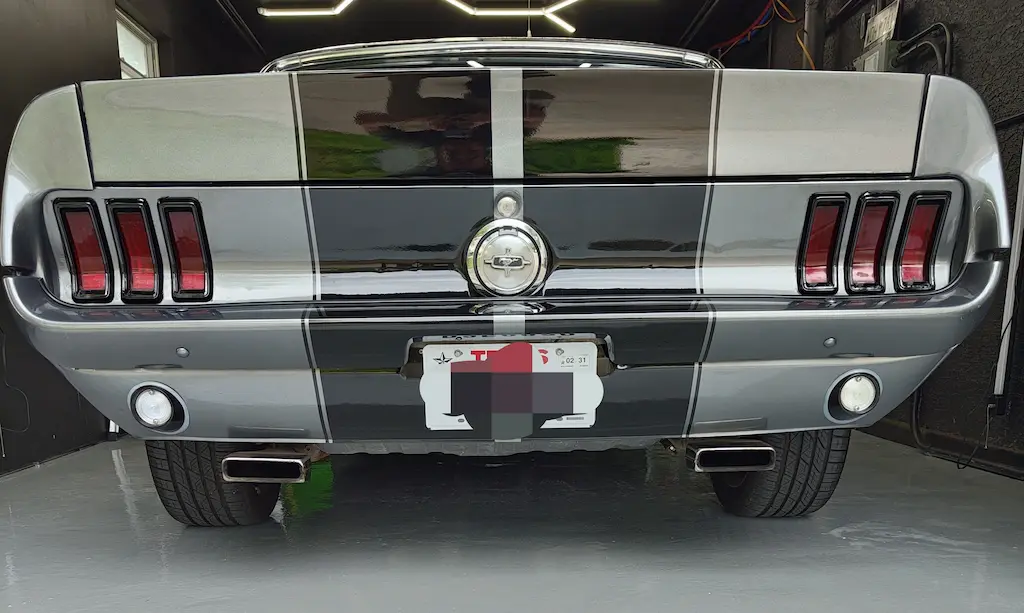
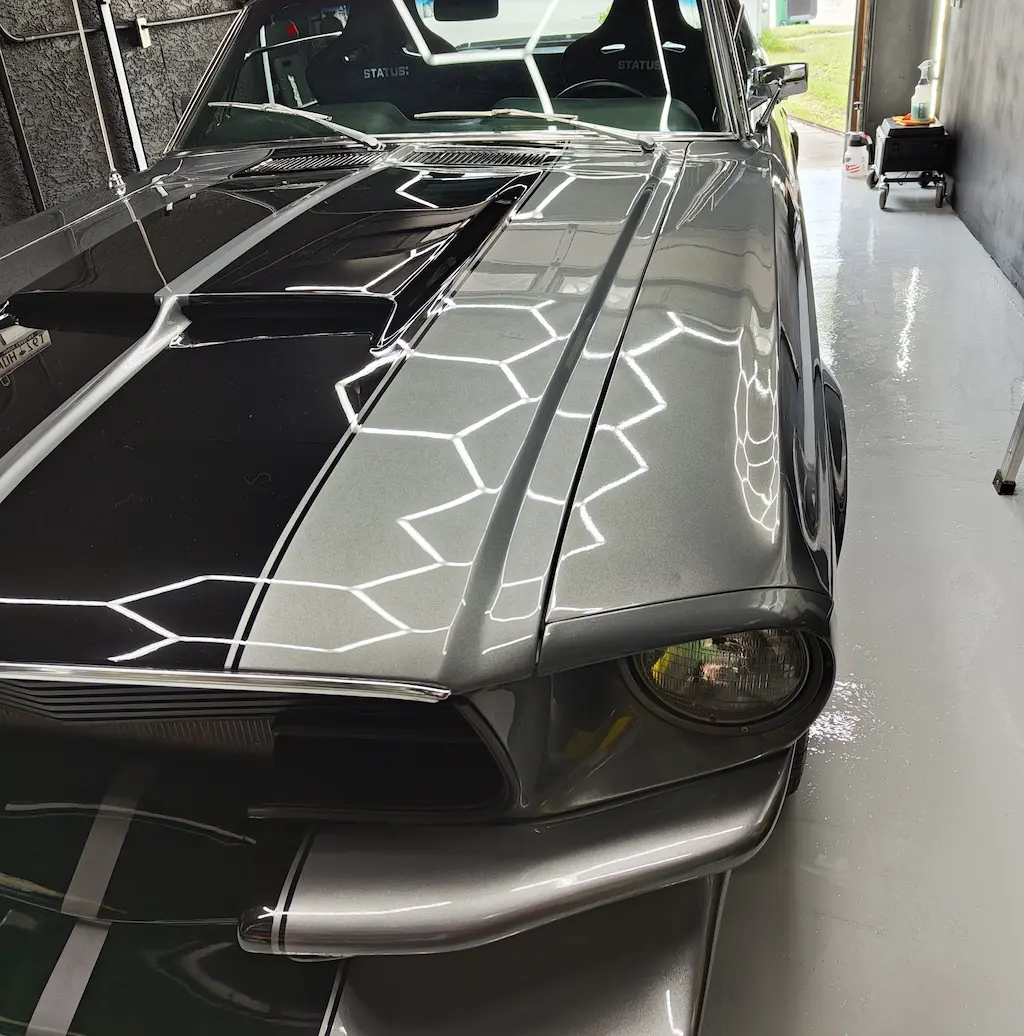
A silver 1968 Ford Mustang with an Eleanor-inspired build: paint-matched front bumper, black racing stripes running the length of the body. The trunk and bumpers were bare silver. Whoever painted the car a few years back simply never finished those sections. The rest of the restoration is still in progress. The interior isn't fully done and the engine is still getting dialed in. But the car is already going to shows and getting professional photoshoots done.
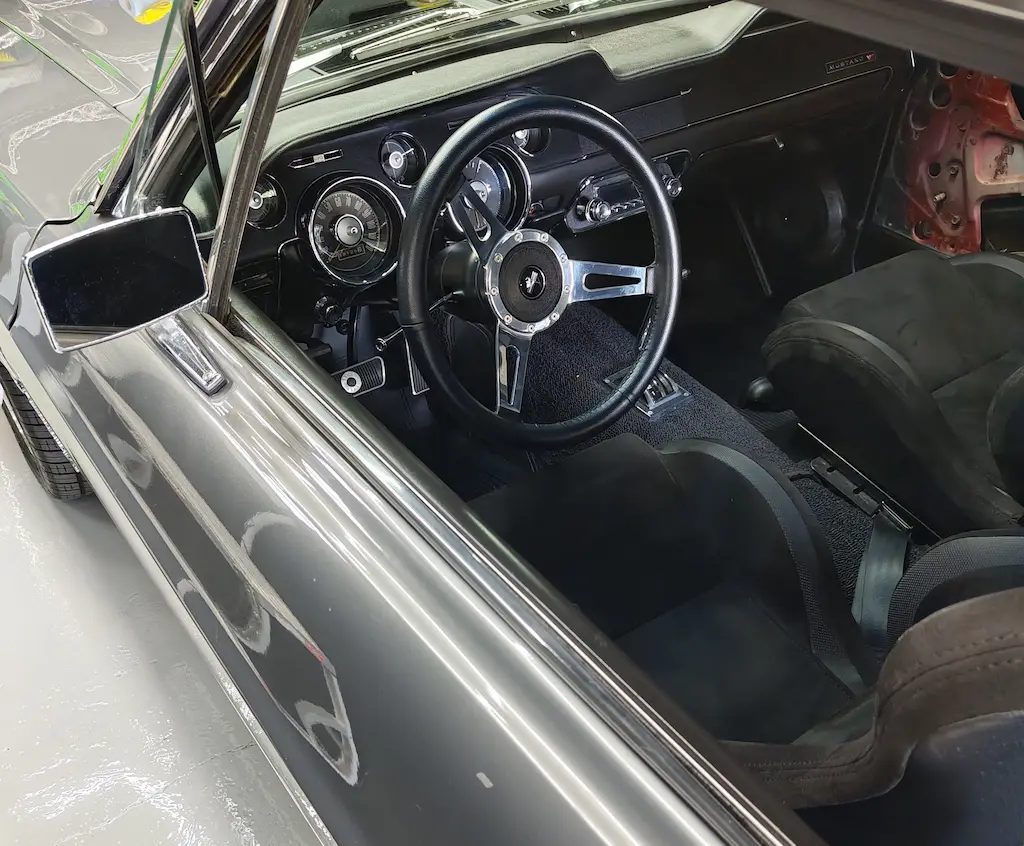
The car belongs to a 19-year-old, and her dad is putting the build together for her. At a car show, an incomplete stripe set draws the eye directly to what's missing. The goal was to complete the stripe pattern and make it look like it always came that way.
Why use vinyl instead of just repainting those sections?
Matching black to black isn't the hard part. The hard part is getting the stripes straight, making them look like they belong, and making sure they last. The original stripes on this car were shot before the clear went down. They're one layer with the paint underneath. To repaint the missing sections, you'd have to sand the clear on the silver panels only, tape out the stripe layout and hope you get it straight, shoot the black, then peel the tape. Peeling tape off fresh black over existing clear can rip the edge and leave ugly paint lines. Then you're re-clearing those panels and hoping the fresh clear doesn't read different from the rest of the car, which already has a few years on it.
Vinyl sidesteps all of that. The stripes are cut to exact dimensions on a plotter, so straight is guaranteed. There's no tape edge to rip, no clear to match, and nothing permanent. If the car ever gets a full respray down the road, the vinyl comes off and those panels go with it. For a restoration that isn't finished yet, that matters.
Why 3M 2080 High Gloss Black specifically?
The High Gloss line is a newer addition within the 3M 2080 family. It replaced what most people think of as standard 2080 and costs a little more. Not much. And for this kind of job, it's not even a question. The finish has virtually no orange peel and a depth that reads like paint, not a decal. Standard 2080 is a good film. High Gloss is the better call when you need to match existing paint.
It also has a protective, stretchable top liner that prevents install marks. Squeegee pressure, tool contact, handling during positioning: none of it marks the film. When you're trimming in place against existing painted edges and working a stripe into a tight body line, you're touching the film a lot. That liner is what keeps the surface clean when it comes off.
How were the stripes cut to match the existing ones?
I measured the painted stripes: width, position, pinstripe spacing. Then drew the full geometry in Illustrator. Those files went to a high-precision industrial plotter. The pinstripes on this car were a quarter inch wide. The machine doesn't even notice that. Its tolerances are a fraction of that. It cuts exactly what the file says. No guesswork.
This is what a plotter changes about custom stripe work. You're not estimating a line or trying to hold a blade steady against a ruler. You draw it, it cuts it. The accuracy is either built into the file or it isn't, and when it is, the output is exact every time.
How do you align a vinyl stripe to an existing painted edge?
This is where the install takes some thought. If you cut the vinyl to the exact finished length and then try to position it perfectly, you're managing two problems at once: the seam at the transition point and the alignment across the full run of the stripe. The margin for error is zero.
So I cut the stripes a few inches longer than needed. Lay that extra length directly over the painted stripe at the transition point to lock in alignment, then trim away the overlap once the position is confirmed. The seam ends up exactly where the paint ends, with no gap and no overlap. One variable at a time.
What is different about installing on a classic car body?
1968 Mustang panels were not designed with vinyl installation in mind. Modern panels are flatter, the compound curves are gentler. Classic bodies are the opposite.
The curves and character lines on older cars have tighter radii and less predictable transitions. It's not a reason to pass on the job. It just takes more heat, more patience, and more experience with how film behaves under tension around those shapes. Rushing it is how you get stress wrinkles and lifting edges at every corner. The job takes what it takes.
We cut stripes and design custom graphics in-house. Bring us the car and we'll figure it out.
Could you tell the difference between the vinyl and the painted stripes?
No. The owner couldn't tell, and neither can anyone at the shows. The 3M 2080 High Gloss black matched the existing painted stripes well enough that the distinction disappeared. The paint is only a few years old, so the sheen was still consistent across the whole car. The finish reads the same way under direct light, under show lighting, and in photographs.
That's the benchmark for this kind of work: not just close enough, but indistinguishable. The owner left a Google review.
Frequently Asked Questions
Can vinyl stripes match painted stripes on a classic car?
Yes. With a premium cast film like 3M 2080 High Gloss and a plotter-cut stripe set, the result is indistinguishable from paint, even on show cars where people are looking at the details. The finish depth and lack of orange peel are what make the difference.
What vinyl film looks the most like paint?
3M 2080 High Gloss is the closest thing in the vinyl catalog to a painted finish. It's a newer line within the 2080 family, costs a little more than standard 2080, and delivers a finish with virtually no orange peel and real paint-like depth. For any job where matching paint matters, it's worth the difference.
How are custom vinyl stripes cut to match existing painted stripes?
Measure the painted stripes, draw the geometry in Illustrator, cut on a high-precision industrial plotter. The tolerances are well below a quarter inch. Complex shapes, exact widths, and pinstripes are all achievable without hand-cutting. The vinyl is then cut slightly long and trimmed in place against the painted edge so the transition is exact.
Can vinyl stripes be removed from a classic car without damaging the paint?
Yes. Vinyl installed on properly prepped paint comes off cleanly with heat and careful peeling. The underlying paint is protected during the install and left intact on removal. For a restoration still in progress, that's a real advantage over paint. Nothing is permanent if the car gets redone later.
How do you prep old paint before applying vinyl stripes?
Any quick detailer, wax, or surface protectant has to come off first. An all-purpose cleaner and degreaser handles paint that isn't too old. The goal is a clean, bare surface with no residue that could interfere with adhesion. Surface contamination is the most common reason vinyl lifts at edges before it should.