Jump online, and you can easily find a guy promising to wrap your vehicle for a thousand bucks out of his driveway. Taking that deal usually ends in a ruined clear coat, so let's talk about the real numbers for a job done right.
If you want a professional full car wrap in 2026, expect to pay starting at $3,200 and up from there. The final price depends on the size of your vehicle, the specific vinyl you choose, and the overall complexity of the installation.
You get what you pay for in this industry. Let's break down exactly where your money goes when you book a wrap.
1. Size and Shape
Bigger vehicles require more raw material and more labor hours — though it's not always a straight line.
- Compacts and coupes (Miata, BRZ, Civic) typically run $3,200 to $3,500.
- Mid-size sedans and crossovers (Camry, Accord, RAV4) run $3,200 to $3,600. The floor is the same as a compact because they use a similar amount of material and the flatter body lines often make them easier to wrap than a small sports car.
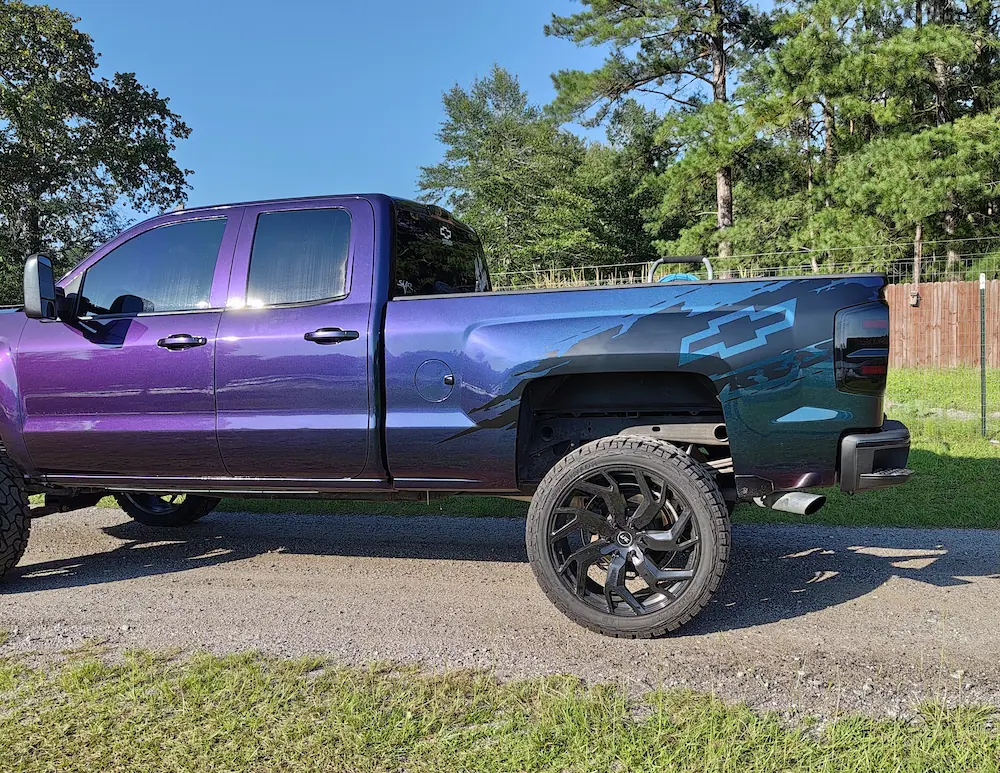
- Trucks and full-size SUVs start around $3,350 and can reach $4,000 or more. This range is wide on purpose — a Ford Ranger and an F-350 are completely different jobs. Cab style, bed length, and body complexity all affect the final number. Get a quote on your specific truck rather than assuming a ballpark.
The physical shape of the car matters just as much as the size. A modern sports car with deep vents, aggressive body lines, and an intricate front bumper takes us twice as long to wrap as a flat-sided truck.
2. The Material
We only use premium cast vinyl from industry-standard brands like 3M, Avery Dennison, and Inozetek.
- Gloss, Matte, and Satin finishes are standard and set the baseline for our pricing.
- Color-Shift films cost the manufacturers more to produce, bumping up your final invoice by a few hundred bucks.
- Chrome sits at the top of the food chain. It is extremely rigid, unforgiving, and requires a highly specific installation technique. We charge a premium for the added difficulty.
3. The Prep Work
This is where cheap shops fail. A flawless wrap is 80% prep work. Before we touch the vinyl, we hand-wash the car, chemically strip the tar, and clay-bar the paint until it feels like glass.
Once the paint is clean, we tear the car apart. We pull the door handles, drop the mirrors, and remove the taillights. We do this so we can tuck the vinyl deep behind the body panels, ensuring you don't see your original paint color bleeding through the gaps.
Avoid the Cheap Quote
If a shop quotes you $1,500 for a full color change, walk away. They hit that low price by using cheap, unbranded vinyl with an industrial adhesive. It will rip your clear coat right off when you try to remove it three years later. Even worse, they usually skip the disassembly process and trim the vinyl with a razor blade directly on your paint, leaving deep cuts I end up having to fix later.
A proper wrap protects your factory paint while completely transforming your vehicle. Don't cheap out on the installation.
If you're weighing color PPF as a longer-lasting alternative, we've compared both options head to head: color PPF vs. vinyl wrap in Austin.
Tell us your make, model, and finish — we'll give you a real number, no obligation.