Spend ten minutes researching paint protection, and you will immediately drown in conflicting advice and marketing buzzwords. Let's clear up the confusion and look at what these two heavyweights actually do out in the real world.
Paint Protection Film (PPF) is a thick, physical shield that stops rock chips. A ceramic coating is a polymer that makes your paint incredibly glossy and repels water. They do entirely different jobs. If you want to stop impact damage, you need PPF. If you want an easy-to-wash vehicle that always looks wet, you want a coating.
Having installed both on cars, motorcycles, and boats for over a decade, I can help you cut through the marketing noise to see how these products perform in the real world.
Paint Protection Film: The Armor
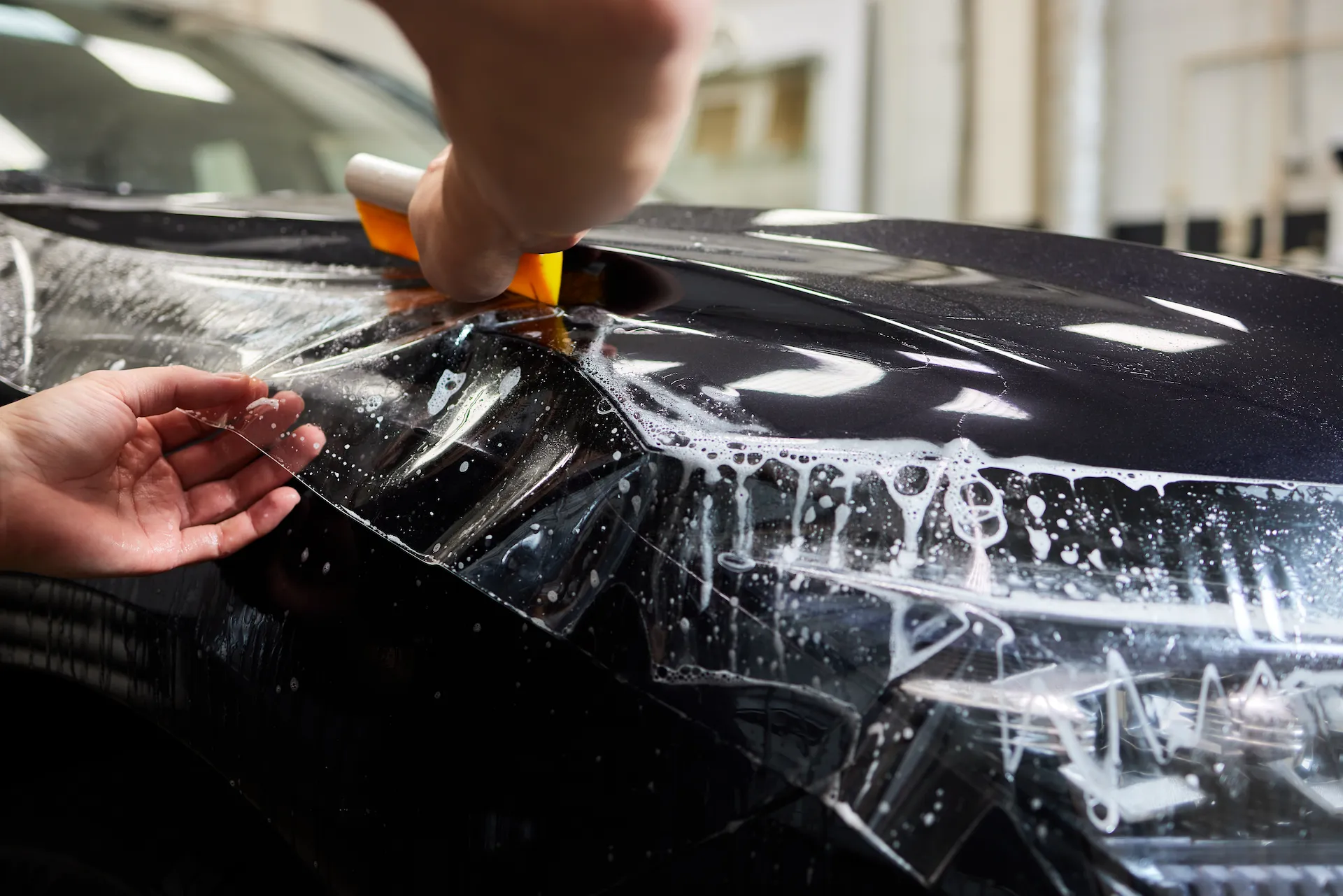
You may have heard it called PPF, paint protection or even clear bra. PPF is a transparent, urethane-based film we lay directly over your paint. It measures about 8 mils thick — eight-thousandths of an inch — giving it the mass to absorb heavy impacts.
What PPF Does
- Eats Rock Chips: This is the main event. If you spend time on the highway, rocks hit your front bumper. PPF takes the hit so your bare paint doesn't.
- Heals Itself: Good PPF features an elastomeric top coat. If you drag a bush or run through an automatic wash and get swirl marks, parking outside in the warm sun makes the polymers flow back together to erase the scratches.
- Takes the Brunt of Vandals: It won't survive a sledgehammer, but it will survive a rogue shopping cart or a light key scratch. Replace the damaged piece of film, and the paint underneath still looks brand new.
What PPF Doesn't Do
It doesn't automatically keep your car clean. The film itself catches dirt just like your factory paint.
Ceramic Coating: The Force Field
We apply a ceramic coating by hand so it chemically bonds with your factory clear coat. It hardens into a microscopic, glass-like layer of protection.
What Ceramic Coating Does
- Sheds Water: The surface becomes incredibly hydrophobic. Water beads up and flies right off. Mud and road grime have a hard time gripping the slick paint, making your weekend wash surprisingly fast.
- Blocks Contaminants: It provides a barrier that stops bird droppings and tree sap from etching into your paint.
- Amplifies Gloss: A high-quality coating makes your paint look deeper and richer than a traditional wax ever could.
What Ceramic Coating Doesn't Do
It does not stop rocks. A microscopic layer of quartz cannot absorb the impact of a piece of gravel moving at 70 mph.
Side by Side
| Protection Type | PPF | Ceramic |
|---|---|---|
| Rock chips & debris | ✓ Stops them | ✗ Can't prevent |
| Door dings (minor) | Partial | ✗ No effect |
| Self-healing scratches | ✓ Yes | ✗ No |
| Hydrophobic surface | Partial (uncoated) | ✓ Excellent |
| UV protection | ✓ Good | ✓ Excellent |
| Chemical resistance | Moderate | ✓ Excellent |
| Enhanced gloss | Minimal | ✓ Significant |
| Easier washing | Moderate | ✓ Yes |
| Removable | ✓ Yes | ✗ No (wears off) |
| Starting price (Austin) | From $800 | From $600 |
| Longevity | 7–10 years | 2–5 years |
How Austin's Climate Affects Both Products
Central Texas summers average over 90 days above 95°F, UV index routinely peaks at 11, and hail is a real seasonal hazard. That changes the math versus someone buying paint protection in Seattle.
Heat and UV on PPF
Good PPF handles Texas heat well. The self-healing top coat actually activates faster in hot temperatures, so minor swirl marks disappear in minutes rather than hours. The risk is low-grade film or a sloppy installation -- heat accelerates yellowing and adhesive failure in entry-level vinyl. We spec KPMF and Llumar products rated for high-UV environments. Cheap film installed outside in this climate will start lifting at the edges within a year.
Heat and UV on Ceramic
The ceramic bond doesn't care about heat -- that's the point. Where Texas gets you is water spotting. Cedar Park's hard water bakes mineral deposits onto ceramic-coated surfaces fast when you let the car air dry after a wash or rain. The coating still works, but you need to dry the car rather than letting it sit. A clay bar treatment every six months keeps buildup in check.
What About Hail?
PPF absorbs a lot, but it will not stop a serious hailstorm. A quarter-sized stone at terminal velocity will dent whatever it hits. Ceramic does nothing for hail either. If hail protection is the goal, a covered parking spot is the honest answer.
What It Actually Costs in Austin
Pricing varies by shop and vehicle size. Here is a realistic picture of the Austin market.
| Protection | Coverage | Austin Price Range |
|---|---|---|
| PPF | Full front end (bumper, hood, fenders, mirrors) | $900–$1,500 |
| PPF | Full vehicle | $3,000–$6,000+ |
| Ceramic | Single-layer (1–2 year) | $400–$700 |
| Ceramic | Multi-layer (3–5 year) | $800–$1,500 |
| PPF + Ceramic combo | Front end PPF, ceramic everywhere else | $1,500–$2,500 |
The right comparison is not PPF vs. ceramic at the same coverage level -- they cover different jobs. If you want impact protection on the front end and easy maintenance everywhere else, a front-end PPF package combined with a full-vehicle ceramic is the most common combo we install.
Which One Is Right for You?
| Your Situation | Best Option |
|---|---|
| Daily highway miles on I-35 or 183 | PPF on the front end |
| Want the car to look freshly washed all the time | Ceramic coating |
| Leased vehicle, can't risk chip damage at turn-in | PPF on high-impact zones |
| Want washing to take 15 minutes instead of an hour | Ceramic coating |
| Keeping the car 7+ years, want full protection | Full vehicle PPF or PPF + ceramic |
| Brand new car, best long-term setup | Front-end PPF + ceramic everywhere else |
Run Both
Combining the two gives you the absolute best setup. We typically lay PPF on the high-impact zones like the front bumper, hood, fenders, and mirrors. Then we apply a ceramic coating over the entire vehicle right over the PPF. You get physical armor up front and insane gloss everywhere else. Match the product to how you drive, and get in touch with us to figure out the right protection package for your ride.
We'll assess your vehicle and give you an honest recommendation — no obligation.