Most wrap posts show you the shiny after photos. I want to show you the shop floor instead. I am Michael, and I work in the install bay. Before we ever lay film, I walk around your car with a camera and snap intake photos of every panel, then bag and label the hardware that comes off. That way, there is a record of what came in and what goes back on.
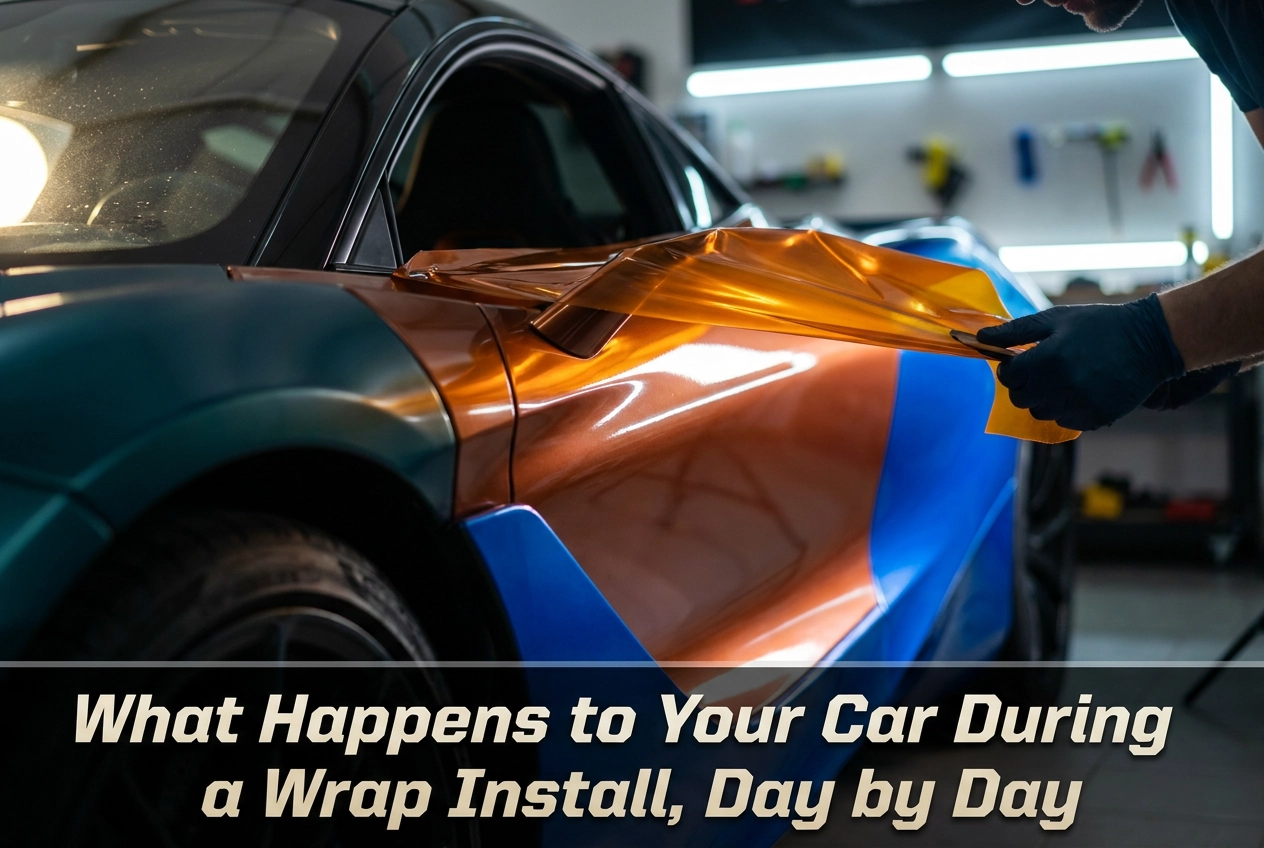
A real vehicle wrap installation is a staged, multi-day process: intake inspection, trim and handle removal, surface prep, panel-by-panel application, post-heating, and a cure window before normal life resumes. Temperature matters too, especially in Austin, so we check the shop and the car before starting. In this post, I will walk you through each stage day by day. You will learn what comes off, how the film goes on, why post-heating matters, how long cure takes, and the rules for that first wash. By the end, you will know what to ask an installer before you hand over your keys.
Why Does a Wrap Take Multiple Days Instead of One?
A full color change is a staged job: intake and inspection, trim removal, prep, panel-by-panel application, post-heating edges, then a set period before the car goes back on the road. Skipping a stage to save a day is how cheap wraps fail early. The calendar is part of the quality.
A wrap is film over your paint, not paint itself. It holds only when the panel underneath is clean, dry, and at the right temperature, with edges tucked rather than trimmed flush. That is why it takes days.
At our Leander shop, a full sedan color change is quoted per vehicle; see our car wrap cost guide for typical ranges. Matte, satin, and gloss cost about the same, specialty films more, and it lasts several years with proper care.
This is a walkthrough, not a DIY guide. Orafol says its films should be applied only by trained, certified installers. Ask any installer which manufacturer certifications they hold. I have 10+ years in and 1,000+ vehicles wrapped. Our vehicle wraps page covers the basics.
We are booking 2 to 3 weeks out. Free quotes, answers within one business day. A shop that can take your car tomorrow is worth asking questions about.
What Happens at Intake?
Your car comes inside and sits. It needs to reach room temperature in a clean, dust-free bay, then we document its condition panel by panel. Intake is the inspection and paperwork stage, so there are no arguments later about your paint.
KPMF's Vinyl Wrapping System guidance is blunt: do not bring a cold car in and start wrapping, because film, air, and panel must all be at room temperature. Avery Dennison sets optimal application at 70 to 80°F, with 50°F as the minimum.
I photograph every car before a single clip comes off: each panel, scratch, chip, dent, the wheels, glass, and odometer. That set is what we pull up at pickup. It is our process, not an industry rule, so ask your installer how they document condition.
Film shows what is underneath it, so rock chips and scratches stay visible. We do not do rock chip repair, and I say so at intake. Paint correction or PPF talk belongs here.
KPMF requires 3 weeks of drying on new paint. Avery Dennison allows baked paint once cool, but air dried or repair paint needs one week. Ask which rule applies to your car.
KPMF specifies cool, controlled storage conditions for its film, so film comes from a controlled room, not a hot shelf.
What Comes Off the Car Before the Film Goes On?
Taillights, headlights where they unbolt, door handles, mirrors, badges, aerials, and interior trim panels come off first. Leave a part on the car and film gets wrapped up to it and cut, which looks fine for a while, then lifts. Removing parts lets film wrap behind the edge instead.
KPMF's wrapping system instructions say lights, handles, aerials, trims, and other protruding items should be removed where possible before application. That word possible carries weight, because every vehicle is different and some clips are not built to come off twice.
Wrap around an edge or tuck behind trim and that edge stays protected from lifting, fingers, and wash mitts. Cut along a seam and that line is where every wrap eventually fails.
This stage is where experience shows. Old clips and brittle tabs break when you force them. Ask what comes off your specific vehicle, and whether original clips get reused or replaced.
Not every car comes apart the same. Some grilles pop off in minutes; others fight you, and that variability is part of why two quotes for the same car can look very different.
How Is the Surface Prepped Before Application?
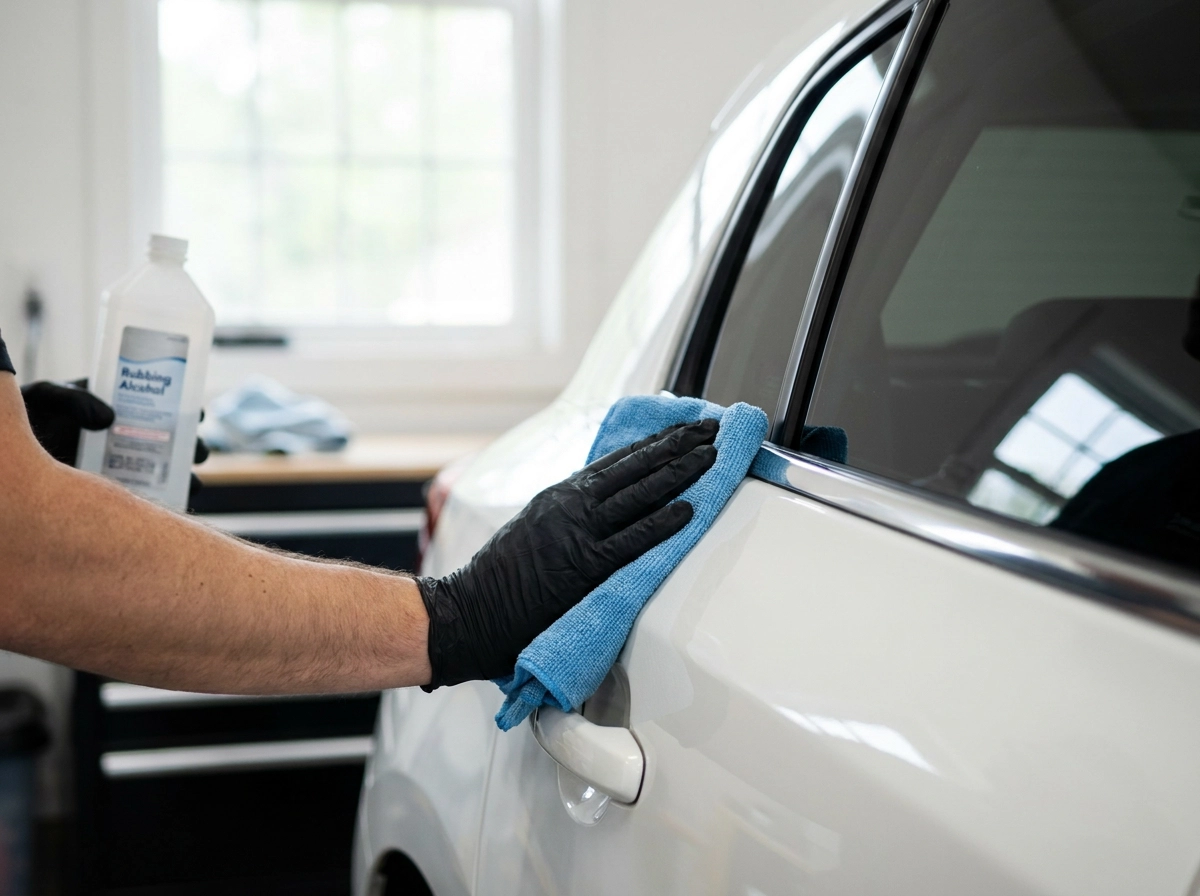
Once the car is apart, the paint gets washed, degreased, wiped in the recesses, and fully dried before a single piece of film is cut. Prep is the least visible stage and the one that decides how long the wrap lasts. Dirt, oil, silicone, or moisture underneath means lifting edges and bubbles later.
KPMF's wrapping guidance runs four prep stages:
- Hand wash to strip dirt.
- Degrease with roughly 10% white spirit, recesses included.
- Wipe recesses with 75% isopropyl alcohol, then dry with a lint-free cloth.
- Heat gun dry, especially edges and rubber seals.
The heat gun pass is where I spend the extra minute. Water hides along rubber seals, door jambs, and mirror bases, then weeps back out under the film and lifts it. The bay smells like degreaser and the job has started.
KPMF wants each panel cut, then cleaned again before application, so cutting dust never gets trapped. Trapped dust under gloss shows as bumps you cannot unsee. Wax and polish residue must be fully removed before installation; your installer will tell you what's safe after. Our bay stays clean and well lit; a dusty shop indoors is still dusty.
How Does Panel by Panel Installation Actually Work?
One panel at a time, in a planned order. Film gets cut for that panel, the panel is cleaned again, the film is positioned, and I work the air out from the middle to the edges. Then it is heated and set before the next panel. No vehicle wrap installation happens in one giant sheet.
KPMF recommends and warrants dry application. Wet application with slip solution on a full color change carries different risks on complex curves.
Bumpers, mirrors, curves, and recesses call for cast vinyl, which is made to stretch and hold its shape. That is a physical property of the film, not brand loyalty. It is why a quote built on the wrong material looks cheap.
We install color PPF in bulk rather than from pre-cut plotter templates. Bulk takes longer, uses more material, and shows up in the quote. Here is how color PPF installation works.
In the bay you see three colors on one car, film trimmed and tucked at the end, and long waits on a curved bumper corner. It does not look like progress until it suddenly does.
Tell us your make, model, and what you have in mind. We'll give you an exact quote, not a ballpark.
Why Does Post-Heating Matter So Much?
Post-heating warms the film after it has been stretched, so it relaxes and remembers the shape of your panel instead of pulling back flat. It is aimed at edges, recesses, and compound curves. Skip it, and the film fights the car and eventually lifts along those same edges.
To fit a curve, film gets stretched, so it sits under tension. Heat lets it settle into that shape and bond on its own terms. Post-heating is a durability step, not a looks-good-on-the-day step. Avery Dennison and Justin Pate of the Wrap Institute cover why post-heating affects long-term durability and which areas need it. In my bay that means a heat pass on every edge and a hands-on check once it cools.
Ask about door edges and jambs, wheel arches, bumper corners and recesses, mirror caps, and any tight radius. Rushed jobs lift there first. Orafol places Texas in Climate Zone 2, humid and warm, expecting shorter service life than milder zones. Practical version: Texas summers are hard on film, so post-heating and parking matter more here. Use those questions to vet an installer before handing over your keys.
How Long Until the Car Is Ready, and What Does Cure Mean?
Cure is the film's adhesive building grip over time, so the car isn't finished when the squeegee stops. Avery Dennison's application instruction bulletin allows 24 hours for graphics to fully set before the vehicle returns to service, verified by visual and physical inspection. Many shops hold cars longer.
That 24 hour figure is a manufacturer minimum. If your installer quotes a different window, fine, but it should be their stated shop practice and they should explain it. Ask how long your car actually sits.
Inspection is hands-on: edges and recesses get a once over, seams and tucks get a physical feel, and the film gets a visual check for trapped dust, lifting, or tension. That's where a shop catches problems while they're still fixable.
Every job here carries a 12 month craftsmanship warranty covering how we installed it, not road debris, a brush wash, or damage after pickup.
Pickup is a walkaround with your intake photos open, care rules, and a clear answer on the first wash. If nobody gives you care rules, ask before you drive off.
What Are the Rules for the First Wash?
Follow your installer's timing, then wash gently and never with a brush. Avoid wax on matte and satin finishes, it fills the texture and leaves shiny spots. On gloss, use only wax-free products or products without petroleum distillates, and check with your installer first. Brush car washes can scratch any wrap finish and may catch edges, avoid them. Hand washing is the safest option between installer visits.
A vinyl-safe ceramic coating is built for this job.
Avery Dennison's film guidance warns against applying isopropyl alcohol or Avery surface cleaner directly on the film, since it can cause matting, gloss loss, and premature degradation. Same goes for any harsh chemical.
Satin and matte hide swirls but show every fingerprint and smudge, so they need more care than gloss. It is also why those finishes usually belong in film rather than paint, where one scratch means a complete repaint.
Hand wash with gentle soap and clean towels. Ask your installer before any spray product you are unsure about. For the longer answer, ask your installer about vinyl-compatible care products.
What Should You Ask an Installer Before You Hand Over the Keys?
Wash rules aside, ask five things before you hand over the keys: how the shop controls bay temperature, which paint drying rule applies to your car, what comes off, how edges get post-heated, and how many days it stays. Those answers tell you whether a quote is realistic. A cheap quote has stages removed.
- Temperature. Avery Dennison's optimal range is 70 to 80°F, with 50°F the floor for film, air, and substrate. KPMF says the car acclimates indoors before wrapping starts. Ask how they handle a 105 degree August afternoon.
- Paint readiness. New paint needs time to fully cure before wrapping, the rule varies by brand and paint type, so ask which applies to your car.
- Training and certification. Orafol says its films should be applied only by trained, certified installers. Ask any shop you consider what certifications they hold.
- The unglamorous stuff. Total days in the bay, their cure window, first wash rules, and the warranty in writing. Ask every shop you compare.
- Price realism. Get itemized quotes from more than one shop. If a number looks low, ask which stages are included.
The Short Version: What You Are Actually Paying For
A wrap quote is really a schedule: intake photos, disassembly, four-stage prep, panel-by-panel application, post-heating edges and recesses, then a dwell before the car returns to the road. If a quote can't list those stages in order, it isn't describing a full job.
Those details are checkable. Ask about film, air, and panel temperature, paint drying time, what gets removed, and first-wash rules. In Austin, those four questions reveal quickly who does the work and who skips it.
Aftercare is half the lifespan: keep wax off matte and satin finishes, skip the brush wash, and stay away from solvents. Quotes are free, answered within one business day, and we're booking 2 to 3 weeks out.
Conclusion
A wrap is a schedule, not a single afternoon. In my bay, I've watched skipped post-heats lift edges weeks later. Temperature, paint readiness, and removed parts all matter, so ask installers those questions before you commit. Send us your vehicle info for a free quote. We answer within one business day and are booking 2 to 3 weeks out. The value is in every stage done right, and that keeps your car looking sharp.
Frequently Asked Questions
How many days does a full vehicle wrap installation take?
A wrap is a staged, multi-day process rather than a single afternoon job. It includes intake inspection, trim and handle removal, surface prep, panel-by-panel application, post-heating, and a cure window before the car returns to normal use. Skipping a stage to save a day is how cheap wraps tend to fail early.
What happens during the intake stage?
The car comes inside and sits until it reaches room temperature in a clean, dust-free bay. The installer then documents its condition panel by panel, photographing each panel, scratch, chip, dent, the wheels, glass, and odometer before any parts come off. Rock chips and scratches stay visible under film, and rock chip repair is not part of the service.
What parts are removed from the car before the film goes on?
Taillights, headlights where they unbolt, door handles, mirrors, badges, aerials, and interior trim panels come off first. Removing parts lets the film wrap behind the edge instead of being cut up to it, which helps prevent lifting. Not every vehicle comes apart the same way, and some clips are not built to be removed twice.
Why is surface prep important before applying a wrap?
Prep decides how long the wrap lasts. The paint is washed, degreased, wiped in the recesses, and fully dried before film is cut. Dirt, oil, silicone, or moisture left underneath can cause lifting edges and bubbles later. Water often hides along rubber seals, door jambs, and mirror bases, so a heat gun pass is used to dry those areas.
Why does post-heating matter?
Post-heating warms the film after it has been stretched, so it relaxes and holds the shape of the panel instead of pulling back flat. It is aimed at edges, recesses, and compound curves. Skipping it can cause the film to fight the car and lift along those edges over time. It is a durability step, not just a cosmetic one.