You've seen it on Instagram. A car rolls by and the paint seems to shift from purple to green to gold depending on the angle, almost like it's alive. That's a color-shift wrap, and it looks absolutely incredible. But here's what that viral video doesn't show you: the invoice.
Specialty vinyl finishes have exploded in popularity, and for good reason. The problem is that most people get sticker shock when they ask for a quote, because the price of a specialty finish isn't just about the material. It's about everything that goes into making that material look right on your car.
Below we break down how standard and specialty finishes differ, what matte, satin, brushed metal, and color-shift films each bring to the table, why some cost significantly more to install, and how to read a wrap quote so you're not flying blind.
What's the difference between standard and specialty wrap finishes?
Standard gloss, matte, and satin films are relatively straightforward single-layer products. Specialty finishes like brushed metal and color-shift use layered or multi-coat constructions that create their effect through the film's physical structure, not just its color. That difference in construction is why they install differently and cost more.
Most people shopping for a wrap know three finishes: gloss, matte, and satin. Those are the starting point, and if you're torn between them, our matte vs. gloss breakdown covers the day-to-day differences. But car wrap vinyl is not one product. It's a broad category of materials with different constructions, thicknesses, and surface behaviors.
The gap between a basic gloss wrap and a color-shift wrap isn't just visual. It's technical. That complexity shows up in how much surface prep the car needs, how long the install takes, and what the whole job costs. A specialty finish quote that looks similar in price to a standard gloss wrap is almost never an apples-to-apples comparison.
Do matte and satin wraps cost more than gloss?
Not by much, if at all. Matte and satin are the most practical way to get a non-gloss look. They're widely available from professional-grade brands like 3M, Avery Dennison, and KPMF, and any experienced installer knows them well, so labor runs about the same as gloss. A full sedan wrap with us starts at $3,200 in any of the three.
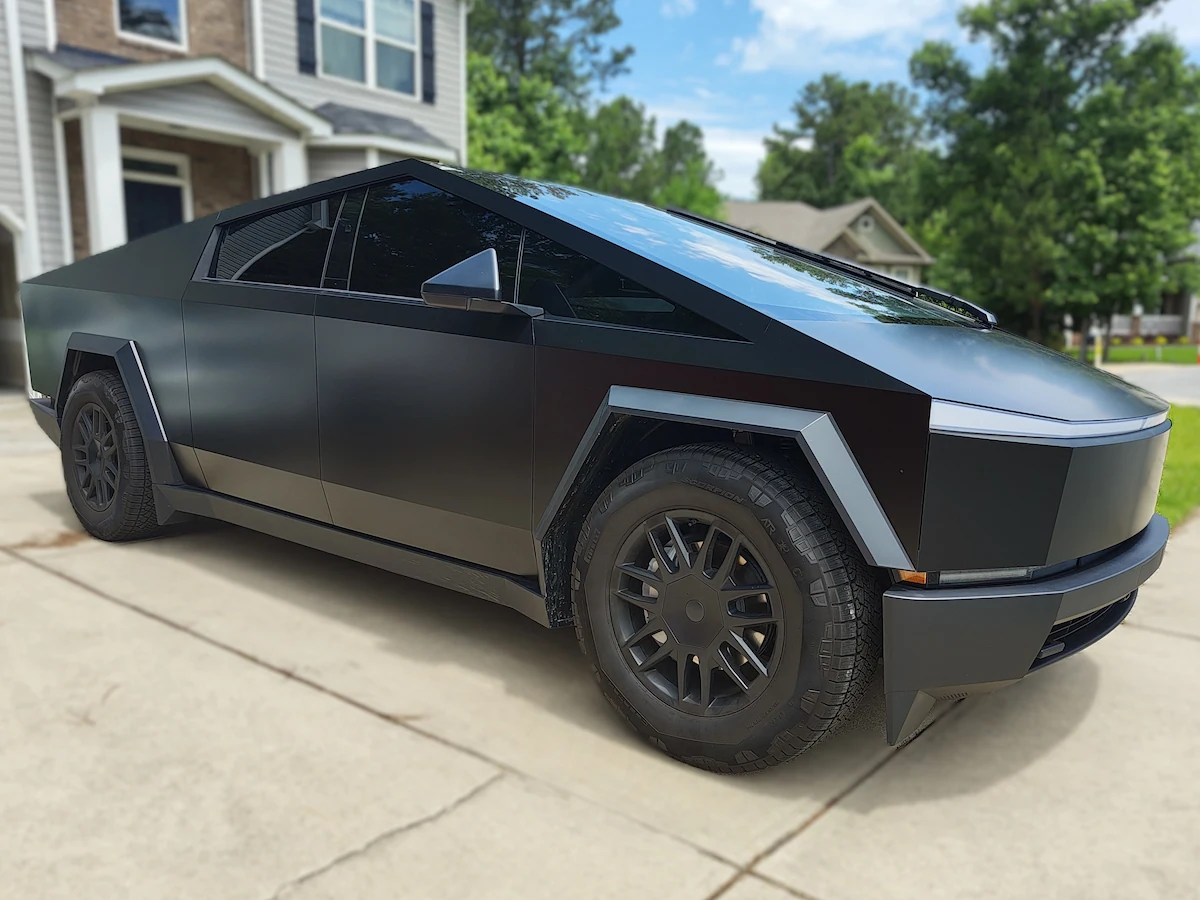
Matte absorbs light instead of bouncing it back, which gives the car a flat, almost factory-sprayed look. It's been a go-to finish for years on everything from daily commuters to weekend show cars. Satin sits right between gloss and matte, delivering a subtle sheen that looks expensive without the babying that full matte sometimes demands.
One thing people underestimate is surface prep. Vinyl follows the panel underneath it, so dents, deep scratches, and contamination show through any film. The surface needs to be clean and sound before the wrap goes on, no matter which finish you pick.
If you want a color change wrap that turns heads without climbing into specialty-finish pricing, matte and satin are the smart middle ground.
Why do brushed metal wraps cost more to install?
Brushed metal vinyl mimics the directional grain of machined aluminum or brushed steel, and that grain has to flow the same way across every adjacent panel: hood, doors, fenders, bumpers. If two panels are even slightly off-grain, your eye catches it immediately. Planning every section around the grain takes time, and time is labor cost.
With a standard gloss or matte film, seams can be tucked and direction doesn't matter. Brushed metal is different. An off-grain panel isn't a subtle flaw. It reads as a mistake the moment you walk around the car. That means the installer can't just cut and stretch film the way they would on a standard wrap. Every section has to be pre-planned before the film goes down.
Installer experience matters more here than almost anywhere else in the wrap category. Someone who hasn't done serious work with directional films is going to struggle, and the skill of the person doing the install has a direct, visible impact on the result.
Brushed metal and other directional-grain films carry a meaningful material premium over gloss. Combined with higher labor, both factors hit the final number. Surface prep is non-negotiable too: the grain texture draws the eye across each panel, so any scratch, bump, or body imperfection underneath shows through more than it would under a solid color.
Why are color-shift and holographic wraps the most expensive?
Color-shift and holographic films have the highest material cost and the highest labor of any finish. Their multi-layer construction reacts to light, so every bubble, lifted edge, or speck of contamination interrupts the effect and draws the eye straight to it. The installer has to work slowly, check the film from multiple angles, and redo anything that isn't right.
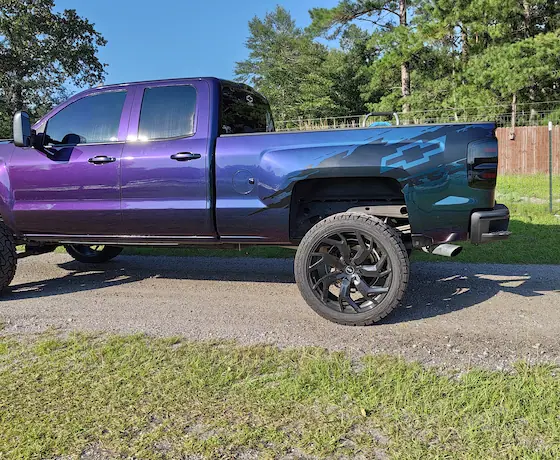
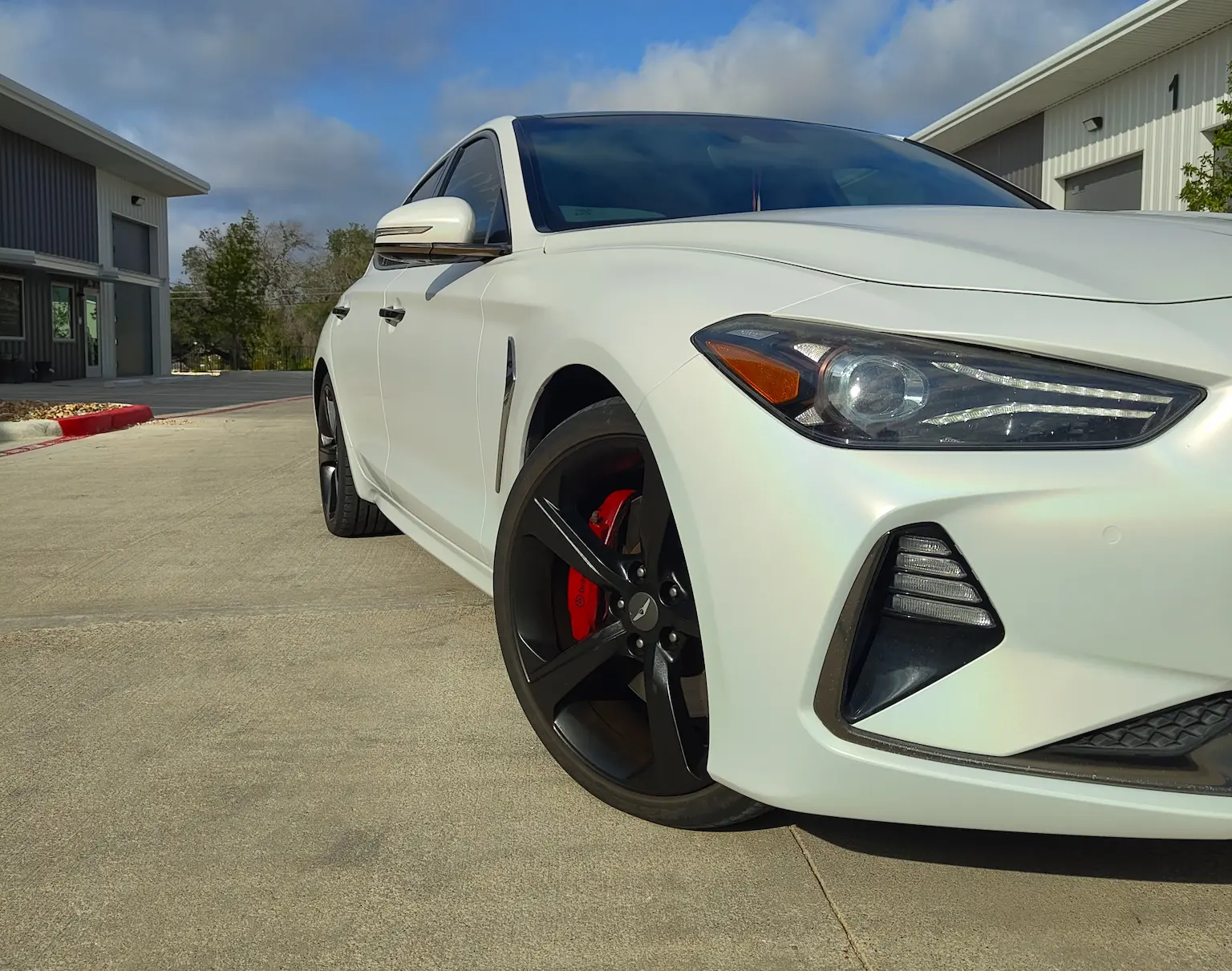
A color-shift wrap (also called a chameleon wrap) shifts hue as the viewing angle changes. Walk around the car and the color visibly transforms. Holographic films push this further, scattering light in a prismatic pattern that throws rainbow-like reflections across every panel. These are the cars that rack up views on social media, and they require the most skill to install correctly.
Because the effect depends on consistent light interaction across every panel, surface cleanliness and careful application are essential. A small bubble that would barely register on a matte film is immediately obvious on a color-shift surface. There's no hiding a mistake.
Not every shop does this well. Before signing off on any quote for a color-shift or holographic install, ask to see completed examples of that specific finish from that specific shop. It's the single most useful thing you can do.
How does surface prep affect the cost of a specialty wrap?
Prep is the cost nobody talks about up front. Specialty finishes are less forgiving of what's underneath than standard films, so the paint has to be decontaminated, clean, and free of damage before the film goes down. If a quote doesn't account for that work, you'll pay for it later, either in dollars or in how the finished car looks.
A full vehicle wrap covers roughly 250 square feet of painted surface. What drives prep cost isn't the square footage, it's the condition of it. Prep for a specialty finish can include paint decontamination, clay bar treatment, scratch correction, and sometimes spot repainting on panels with deeper damage.
None of that is quick. If a quote leaves it out, one of two things is happening: the shop is assuming your paint is perfect, or they left it out to keep the number attractive. Before you sign, ask directly: does this price include a surface inspection and prep work, or is prep quoted separately once you bring the car in? Those are two very different conversations.
At Wrapt, every vehicle gets inspected before any film goes down. That's how the final install ends up looking the way it should, not just how it looked in the estimate. If your car needs paint work anyway, our wrap vs. paint comparison is worth a read before you decide.
How much does a specialty finish wrap cost?
Start with the baseline: standard gloss black vinyl from a trusted brand like 3M runs roughly $900 in material alone for full-vehicle coverage. That doesn't include labor, but it's a useful floor to measure premiums against. Brushed metal costs more because of the film premium and grain alignment labor. Color-shift and holographic sit at the top of the range for both material and labor.
Installed, a full color change wrap on a sedan starts at $3,200 in gloss, matte, or satin. Specialty finishes run higher from there, and the exact total depends on the vehicle and finish, so get an itemized quote.
| Finish | Film Cost vs. Gloss | Labor | Prep Sensitivity |
|---|---|---|---|
| Gloss | Baseline | Baseline | Standard |
| Matte / Satin | About the same | About the same | Standard |
| Brushed Metal | Meaningfully higher | Higher (grain alignment) | High |
| Color-Shift / Holographic | Highest | Highest | Highest |
Partial wraps and accent work in a specialty film cost proportionally less, which is a good way to get the look on a hood, roof, or trim without committing the whole car. For everything else that moves a wrap price, see our Austin car wrap cost guide.
The most important thing when comparing quotes: a low number on a specialty finish almost always means something was left out. Usually it's the prep, the film quality, or the level of care in the install.
Tell us your vehicle and the film you have in mind. We'll give you an itemized quote, not a ballpark.
How do you read a specialty wrap quote?
A solid quote separates material and labor, names the film brand, says whether surface inspection and prep are included, and spells out the warranty. If you get a single number with no explanation, ask how each part was calculated. That question alone tells you a lot about how a shop operates.
- Ask for a breakdown. Material and labor should be separate lines.
- Ask what film they're using. 3M, Avery Dennison, and KPMF are professional-grade brands with documented performance and real warranty backing. A quote built around unknown off-brand film isn't a comparable option at a better price. It's a different product entirely.
- Ask if they've done it before. Request photos of completed work in the specific finish you want. A shop that can't show examples probably doesn't have enough of them.
- Read the warranty carefully. Specialty films can carry different warranty terms than standard films, so read the language before you sign.
- Ask about post-install inspection. On a color-shift or holographic wrap, small issues that would be invisible on a solid finish are obvious.
The finish and the installer's experience with it need to be evaluated together. The same standard applies to commercial wraps, where the quality of the install carries straight through to how your business looks on the road.
Which specialty finish makes sense for your car?
For most people, satin is the easiest yes. Brushed metal only makes sense if you're fully committed to the look, and color-shift rewards owners who take their time choosing the color. Think honestly about how you use the car: daily drivers pick up scratches and dings that specialty finishes show more than standard films do.
- Satin is the easiest yes. It reads premium, holds up well on daily drivers, and works on virtually any color or body style. If you want something noticeably different from stock without the complexity premium, satin gives you the most for your money.
- Brushed metal demands commitment. If the grain alignment is off even slightly, the finish actively highlights the mistake because your eye follows that directional texture straight to it. Go all in or pick something else.
- Color-shift rewards patience. The cars that look best in this finish belong to owners who spent real time matching the color combination to the car and how it sits in different lighting. Rushing the decision almost always shows in the result.
A daily driver and a weekend car are very different situations. If you're in Austin and want to see these finishes in person before committing, we'll walk you through the options and put together a real quote based on your actual car.
Is a specialty finish worth the extra cost?
When it's done right, yes. Specialty finishes cost more because they should: the materials are more complex, the surface prep is more demanding, and the installer needs real experience with that specific film. The key is making sure the quote reflects all of that, not just the film.
That's the whole framework. Know what finish you want, understand what it requires, ask the shop direct questions, and verify the film brand on every quote. Work with a shop that will look at your actual car, answer your questions straight, and back the work with a real warranty. That's how you know the number you're getting reflects what the job actually takes.
If you're in Austin and want a straight answer on what your car needs, request a free quote and we'll get back to you within one business day.
Frequently Asked Questions
How much does a specialty finish car wrap cost?
A full color change wrap on a sedan starts at $3,200 in gloss, matte, or satin. Brushed metal and color-shift cost more because the film is pricier and the install is slower and less forgiving. Ask for an itemized quote for your specific vehicle and finish.
Do matte and satin wraps cost more than gloss?
Not by much, if at all. They're familiar films for any experienced installer, so labor is about the same. A full sedan wrap with us starts at $3,200 whether you choose gloss, matte, or satin.
Why is brushed metal wrap harder to install?
The grain has to run the same direction across every adjacent panel. Even a slight mismatch reads as a mistake, so every section has to be planned before the film goes down.
Why do color-shift wraps cost more?
The multi-layer film costs more, and the reflective layers amplify every bubble, lifted edge, or bit of contamination. The install has to be slower and more careful than any other finish.
What should a specialty wrap quote include?
Separate material and labor lines, the film brand, whether inspection and prep are included, and the warranty terms for both the film and the installation.
Which specialty wrap finish is best for a daily driver?
Satin. It reads premium, holds up well, and skips the labor premium of brushed metal or color-shift. Specialty finishes show daily wear more visibly and make more sense on a weekend car.