I get asked this in almost every wrap consultation: matte or gloss? Chrome and color-shift are their own conversation, but for a straight color change, it usually comes down to these two. They look completely different, and the day-to-day upkeep is not close to the same.
This is not really a durability question. Both finishes hold up in Texas heat for the same 3 to 5 years with proper care. It is a maintenance and personality question, and it deserves a straight answer before you commit.
What's the real difference between matte and gloss wrap?
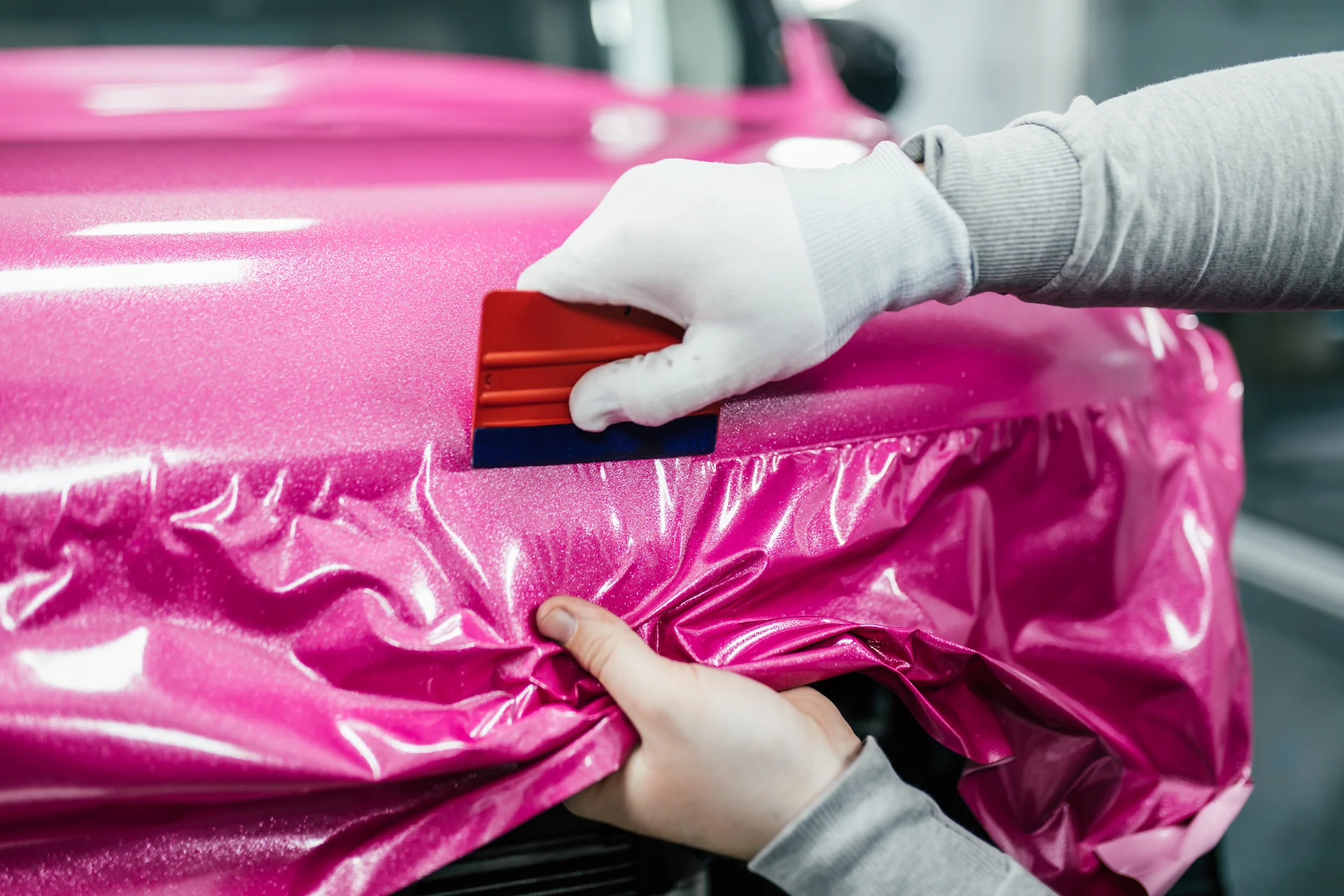
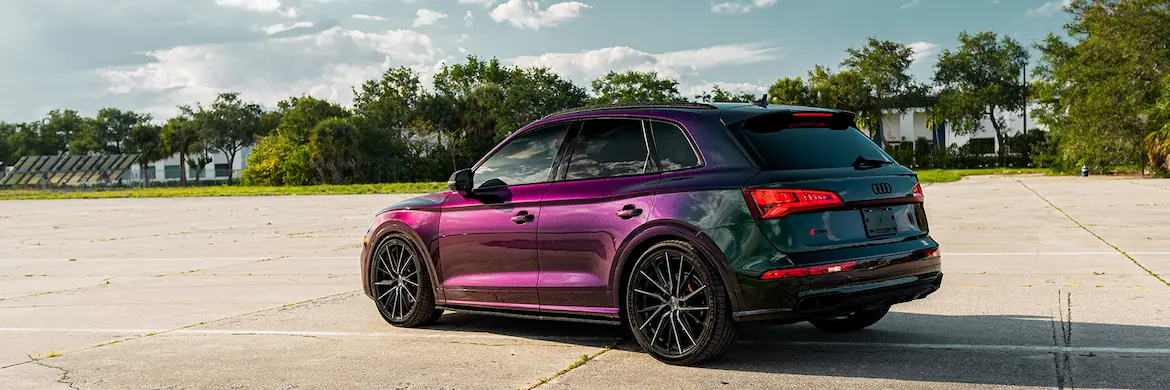
Gloss vinyl has a reflective, mirror-like top layer, similar to factory paint. Matte vinyl has a flat, non-reflective top layer that scatters light instead of bouncing it back. The base film and adhesive underneath are the same either way. The difference is entirely in the top coat, and that top coat is what changes how the finish behaves once it leaves the shop.
Does a matte wrap cost more than a gloss wrap?
Not by much, if at all. A full color change wrap on a sedan starts at $3,200 whether you go matte, satin, or gloss, since the base film and installation labor are nearly identical between the three. What actually raises the price is complexity: chrome, color-shift, and heavily textured finishes cost more because the material itself is pricier and installs slower. For a full pricing breakdown, see our Austin car wrap cost guide.
Which finish is harder to keep clean, matte or gloss?
Less than people think, and the routine is basically the same for both. Use a pH-neutral car soap and either hand wash or a touchless automatic wash. Skip anything with brushes, they'll scratch a wrap the same way they scratch bare paint, so that's not a matte-specific problem. What actually differs is what you can put on top of the wash. Skip wax on both finishes (more on that below) and stick to a wrap-safe ceramic if you want extra protection.
Does matte wrap show scratches and swirl marks more than gloss?
Matte, and it's not close. Fine scratches show up easily on true matte film, and they're tougher to buff out than on gloss since there's no reflective layer to blend them into. We see this even during install: an errant squeegee edge or tool contact on matte can leave a mark that doesn't want to come out. Gloss shows swirl marks under direct sunlight too, but it's more forgiving of small day-to-day nicks.
Staining is the other weak spot for matte. Bird droppings, tree sap, and bug splatter can etch into the textured surface if they sit too long, and that kind of damage does not buff out the way it sometimes can on gloss. A stained or damaged matte panel usually needs to be re-wrapped, not spot repaired.
A few things don't change no matter which finish you pick: price starts at $3,200 either way, lifespan is 3 to 5 years either way, and none of the three are wax safe. Automatic washes are fine for any finish as long as they're touchless. Brushes will scratch all of them, and your paint too, so that's never really the finish's fault.
| Matte | Satin | Gloss | |
|---|---|---|---|
| Shows fine scratches | Easily, hard to buff out | Moderately | Visible under direct light |
| Shows staining/etching | High if neglected | Medium | Low |
| Spot repairable if damaged | Rarely | Sometimes | Often |
Can you wax or ceramic coat a vinyl wrap?
Skip wax on any wrap, matte or gloss. This surprises people coming from paint, but wax, especially carnauba-based wax, pulls oils out of the vinyl and dries the film out over time. On gloss that's a durability problem, not just a shine problem, and on matte it also adds a sheen that ruins the look you paid for. Most quick detailers are fine as long as they're light on wax content.
Ceramic coating is a different story, and it works on any finish. The same vinyl-safe coating typically works on matte and gloss alike. What matters is that it's formulated for vinyl or PPF, not for paint. Vinyl expands and contracts more than paint does as temperatures swing, so it needs a coating that flexes with it. Tell your installer which finish you're running before coating day so they spec the right product.
We'll walk through matte, satin, and gloss in person and give you a straight recommendation based on how you actually drive and maintain your car.
Does matte or gloss last longer in the Texas heat?
Both are good for the same 3 to 5 years with proper maintenance. UV exposure is the main driver of wrap lifespan in Texas, and it affects matte and gloss film equally. The real difference is that matte shows the effects of neglect sooner. Embedded dirt, water spots, and staining are harder to reverse on a textured surface than on smooth gloss, so a matte wrap that isn't cared for correctly can look tired well before the film itself has actually failed.
Satin: the finish nobody asks about but should
Every consultation is framed as matte versus gloss, but satin barely comes up until I bring it up myself. Satin sits in the middle: a soft, low-reflection look that reads as flat from a distance, without matte's scratch and staining sensitivity. It can generally be washed and cared for closer to how you'd treat a gloss wrap.
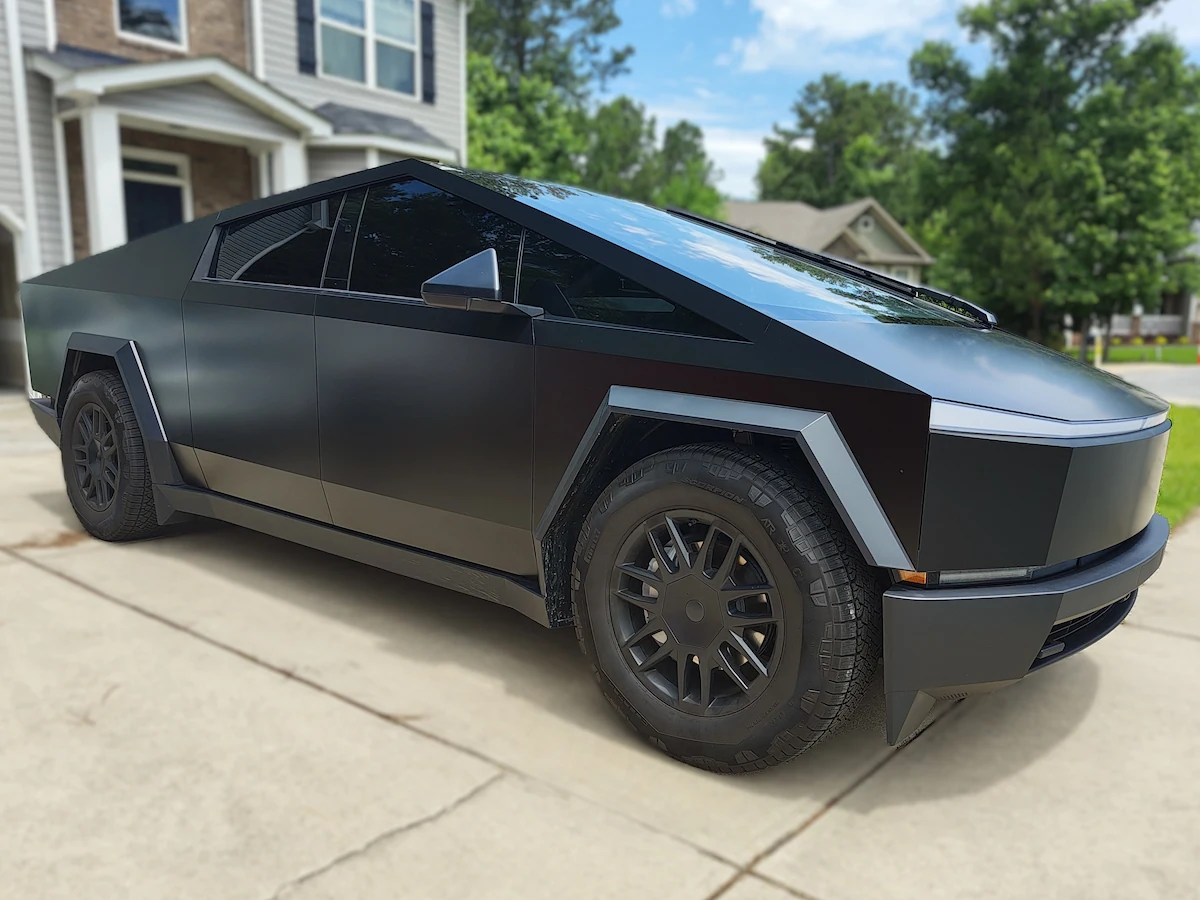
It gets confusing because manufacturers don't all use the term the same way. KPMF and Orafol both sell finishes they call matte that read closer to satin. 3M draws the clearest line, with true gloss, satin, and matte, and on 3M film satin is almost always the one people actually want. True matte black looks like a chalkboard. Satin black is the deep, flat black most people picture when they say matte, and it works on almost any car.
My honest take: for most daily drivers who want a finish that doesn't look like factory paint but don't want to babysit the car, I recommend satin over full matte. You get most of the visual departure from gloss with a fraction of the upkeep headache.
Which finish should you actually choose?
- Choose gloss if you want the lowest maintenance overall, a wrap-safe ceramic instead of wax, and that deep, paint-like reflection.
- Choose satin if you want a modern, non-paint look without matte's scratch and staining sensitivity.
- Choose matte if you're committed to the look, willing to hand wash or touchless wash only, and disciplined about treating the surface carefully and cleaning stains the day they happen, not the week after.
Frequently Asked Questions
Does a matte wrap cost more than a gloss wrap?
Not by much, if at all. A full sedan wrap starts at $3,200 for matte, satin, or gloss. Specialty finishes like chrome or color-shift cost more because the material is pricier and slower to install.
Can you wax or ceramic coat a vinyl wrap?
No to wax, on any finish. Wax, especially carnauba-based wax, pulls oils out of the vinyl and dries the film out over time, shortening its life on matte and gloss alike. Ceramic coating is fine, and the same coating usually works on both finishes, as long as it's made for vinyl or PPF rather than paint.
Does matte wrap show scratches more than gloss?
Yes, actually. Fine scratches show up more easily on matte since there's no reflective surface to blend them in, and they're harder to buff out than on gloss. Matte is also more prone to staining: bird droppings and tree sap can etch in if not cleaned quickly, and damaged matte panels usually need re-wrapping rather than a spot fix.
Which finish lasts longer in Texas heat, matte or gloss?
Both hold up for the same 3 to 5 years. UV exposure affects both equally. Matte just shows neglect sooner since staining and embedded dirt are harder to reverse than on gloss.
What is satin wrap and how does it compare?
Satin sits between matte and gloss: a soft, low-reflection look with maintenance closer to gloss than matte. For most daily drivers who want a non-paint look without the upkeep, satin is usually the better call than full matte.