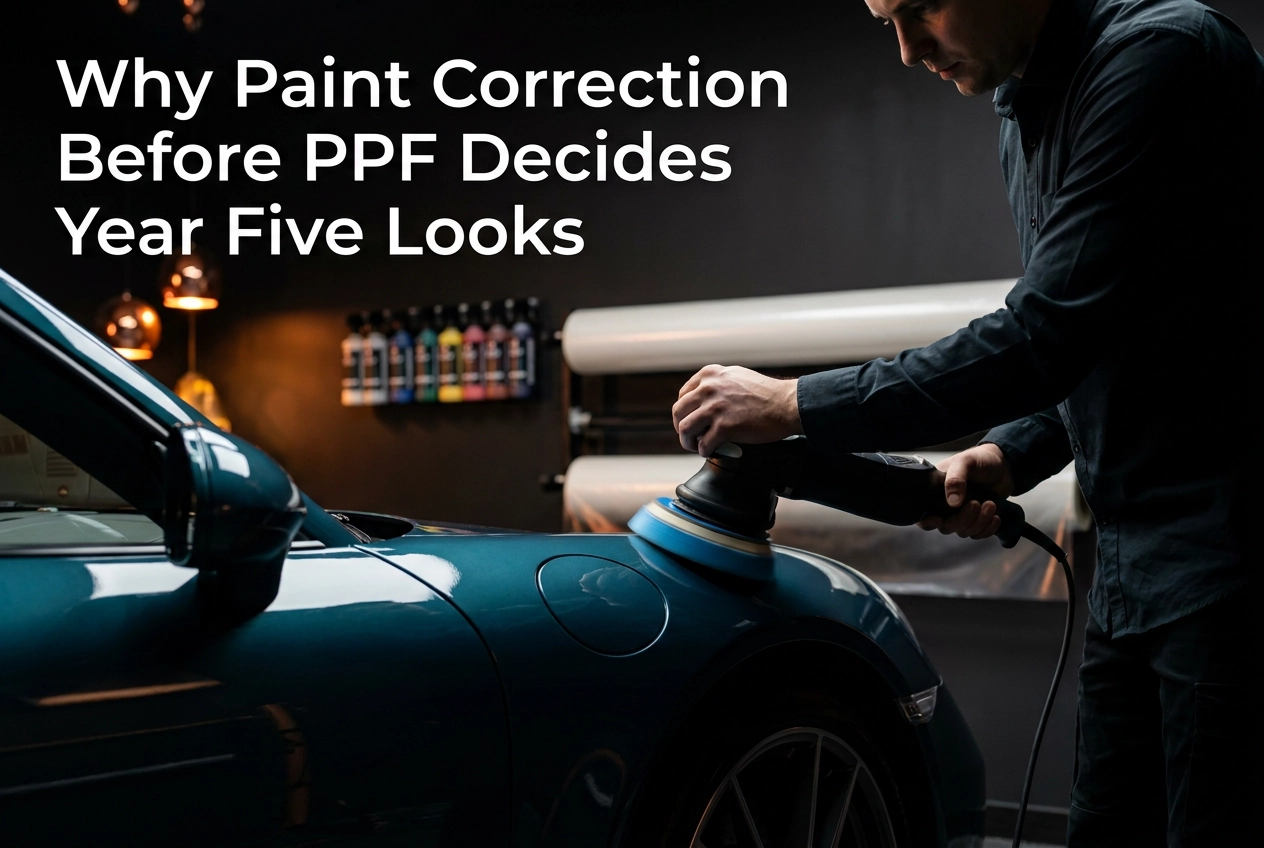
People book a paint protection film installation thinking about the film. I get it. I'm Michael, and after years in the install bay, I used to think that way too. Then I watched a black hood under low-angle raking light turn into a map of swirls, and I realized the film was never the whole story. PPF and ceramic coating lock in whatever is underneath them. Swirls, water-spot etching, and touch-up texture do not disappear under gloss film. They get sealed in, which is why one car looks glassy at year five and another looks muddy. Correction has to happen before install or not at all. Once film is on the panel, you cannot polish it. In this post, I will walk through what really gets sealed under PPF or ceramic, why clear coat decides everything, how to read defects before an install, what correction can and cannot fix, why film cannot be polished later, why gloss film looks different car to car, how ceramic behaves over flawed paint, what changes with satin or matte finishes, what to ask before booking, and what prep actually buys you.
What Really Gets Sealed Under PPF or Ceramic Coating?
Film and coating are not erasers. They preserve the surface exactly as they find it. Every swirl, every etch mark, every touch-up ridge sitting on your paint at install day stays right there, only now it looks permanent. Prep decides how that looks down the road more than the product name on the box.
In my bay, I pull a car in and run a light down the hood. Inside thirty seconds I know whether the quote needs correction added. That moment is the whole decision. Everything after it is execution.
Paint protection film installation and ceramic coating installation both start with the same question: what is on this panel right now? Answer that wrong and no brand saves you.
I am calling this studio practice, not a manufacturer promise. After 1,000 plus installs, this is what we see. Nobody in this trade has run a tracked study with a spreadsheet of results, and I am not going to pretend otherwise. This post explains the mechanism behind how a coated car looks in year five, not lab numbers.
So treat the prep line item as the reason to pick a shop, not a fee to negotiate away. The shop that skips inspection is not saving you money. It is hiding a variable.
Why Does the Clear Coat Decide Everything?
The clear coat is a thin, finite layer sitting on top of your color. In my experience, most swirl marks, light scratches, water spot etching, and haze sit in the clear coat. It does not grow back, so every bit of correction you do is spending from a limited account.
Two kinds of damage. If a mark sits in the clear coat, a polish can level it. If a scratch cut through to the base coat, polishing will not put paint back. That panel needs touch-up or repair, and correction can soften how visible it stays.
The way I explain it to customers: the compound levels the surface down to the bottom of the defect. That is why What Paint Correction Removes starts with reading the paint, not grabbing a machine.
A ceramic coating bonds to whatever clear coat is left. A healthy, corrected clear coat is the foundation the coating sits on. Take off too much chasing one stubborn mark and that panel etches and sun damages easier. I would rather live with one faint mark than burn a panel.
How Do You Read Paint Defects Before an Install?
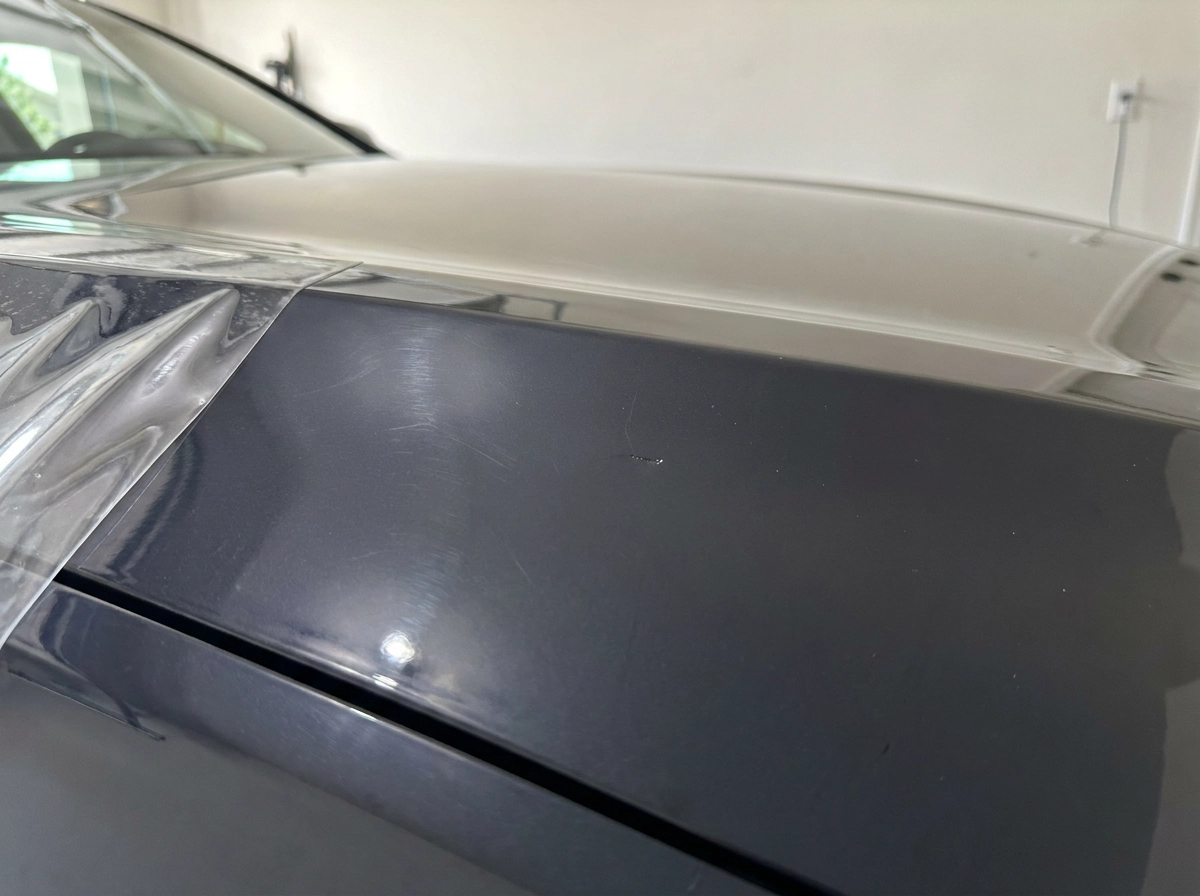
Paint defects hide under flat light. Roll a light down the panel at a low angle and swirls, fine scratches, and water spot etching show as haze or a spider web. That is why inspection happens before a quote is final, not after drop-off.
The same hood that looks spotless under my overhead shop light turns into a map of fine scratches when I lay a light across it at a low angle. Same car, ten seconds apart.
So I walk owners around the car and point at what I see. The correction line gets a reason attached instead of a surprise on the invoice. That is the variable nobody quotes until they have looked.
This is the step some shops skip, and it quietly decides how a paint protection film install turns out. Skipping it does not remove defects. It moves discovery to where nothing can be done.
Ask for defects to be noted or photographed before anything goes on the panel, and ask which ones correction will address. You want to know the gap between what gets fixed and what gets sealed.
What Can Correction Fix, and What Can It Not?
Correction levels defects that sit in the clear coat. It cannot replace paint a scratch removed. In the bay, a rough check is dragging a fingernail across the mark at a light angle: if it catches, the damage is likely below the clear coat and will not polish out; if it glides over, correction has a real shot. I always run a test spot on a small area to see what the paint will actually do before committing the whole panel.
Paint systems, aftermarket resprays, and older finishes all respond differently to the same pad and compound. That is why I test a small patch before committing a whole door.
I have seen what happens when technique goes wrong: too much machine speed, too much pressure, or a mismatched pad and compound pair leaves holograms and buffer trails that look worse in direct sun than what you started with.
Correct what needs correcting and leave the rest alone. Chasing every faint mark on a daily driver is how a panel ends up with thin clear coat and no practical benefit. We do not do rock chip repair, so chips present at drop-off are still there at pickup.
Why Can't You Polish Film Once It Is On the Panel?
Once film goes on, the surface you touch is film, not paint. You cannot machine polish film the way you polish clear coat. Whatever sat under that panel on install day stays there for the life of the film, which makes the pre-install sequence the only window you get. I have held installs back a day to keep that window open.
Color PPF runs 7 to 10 years, so what gets sealed at install day stays with you for most of a decade. That is a long time to be annoyed by one cloudy hood.
Care keeps that prep holding up. Skip wax on any vinyl finish; a vinyl-safe ceramic is fine. For washing, touchless is safe for all film and paint finishes. 3M's own guidance notes that brush washes may dull and scratch film and lift edges, so I steer every customer toward touchless or careful hand washing.
Tell us your make, model, and what you have in mind. We'll give you an exact quote, not a ballpark.
Why Does Gloss Film Look Glassy on One Car and Muddy on Another?
Gloss film is a magnifier. It lays a smooth, clear layer over the panel, so whatever texture sits underneath reads right through it. Corrected paint looks like liquid. Swirled or etched paint looks dull, even though the film came off the same roll.
Two white SUVs, same week, same roll of film, same installer. One hood looked like a mirror, the other like a cloudy day. The only difference was correction on one hood before I started.
In my experience, touch-up paint often sits slightly proud and can cure to a different sheen, so film over it shows a bump or dull bruise instead of a clean reflection.
Ask paint protection film installers what they found on inspection, and ask for the defect photos, because a shop that documents prep expects prep to be why you came.
Does Ceramic Coating Behave Differently Over Flawed Paint?
Different in feel, identical in outcome. Ceramic coating installation adds slickness, easier cleaning, and resistance to water spotting and chemicals, but it is a clear layer sitting over the existing surface. Etching already in the clear coat still shows through it.
What a coating genuinely does well is make washing easier and slow how fast new defects pile up. That is real value on a daily driver. It is not the same as improving the paint underneath it.
Here is the misread I see most in the bay. A freshly coated car looks fantastic because it is spotless and water beads off it, not because the coating filled a single swirl mark. Shine is not correction.
Correction and coating together pay off best. A panel that gets paint correction first and then gets coated keeps that look far longer than correction alone, because your weekly wash is less likely to put swirls back in.
Armour PRO Quartz holds up well with proper washing. No coating on the market rebuilds clear coat or hides damage nobody corrected.
What Changes With Satin or Matte Finishes?
Satin and matte are much harder to live with day to day. Paint can be sprayed in these finishes, but a scratch or scuff usually means a full repaint rather than a spot repair. Polishing a spot on a matte panel leaves a shiny patch that will never blend.
The trade-off is real: matte and satin film hides fine swirls better than gloss, but it still shows texture and telegraphs touch-up edges and panel imperfections underneath.
Care does not get easier. Skip wax, avoid brush washes, use touchless or careful hand washing. In my experience, matte and satin finishes show neglect quickly, in paint or in film, because fingerprints and surface marks read more prominently than they do on gloss.
Correction on these surfaces is limited by design. You cannot polish gloss into a matte factory finish or a matte film, so sometimes the honest answer is that the surface is what it is.
On price, finish choice can change the quote; our specialty wrap finishes cost breakdown covers what satin, brushed metal, and color shift films run.
Either way you go, the prep decision does not change.
What Should You Ask Before You Book an Install?
Whichever finish you decide on, the booking questions are the same. Will the shop inspect the paint under raking light before quoting, is correction included in the quote or tacked on later, and will they show you the defects they found before covering the panel? Any hesitation on that first question is your answer.
Add a few more: which brands are they certified in, do they bulk or pre-cut film, and do they correct before install or install over what is there?
For what it is worth, we are certified with Avery Dennison, KPMF, and Orafol for vinyl and also install 3M. Color PPF is always bulk installed here, never pre-cut. That is just how we work.
Quotes are free, you hear back within one business day, and we are booking two to three weeks out. Every job carries a 12-month craftsmanship warranty, and we do not do rock chip repair. Knowing both before you book keeps the handoff simple. After 1,000 plus installs, the jobs I remember going smoothest are the ones where prep came up early.
What Prep Actually Buys You
Film and ceramic coating preserve the surface they are applied over, not the surface you wish was there. Once a panel gets covered, the window to fix what is under it closes for good.
Treat correction as a decision, not an upsell. Ask for the inspection results and which defects will be addressed, then approve the quote knowing what gets fixed and what gets sealed. Some cars need a full pass, some need one panel, some need none, and a shop willing to say that out loud is telling you the truth.
Conclusion
PPF and ceramic coating protect what is already there. They do not erase swirls, scratches, or clear coat damage once film goes down. I have watched covered panels keep every swirl for years. In my bay, the glossiest jobs are the ones where correction matched the paint, not the quote. Correction is a decision: full pass, one panel, or none. Reach out for a free quote and we reply within one business day. Prep early, and year five still looks intentional.
Frequently Asked Questions
Does paint protection film or ceramic coating fix swirl marks and scratches?
No. Film and ceramic coating preserve the surface exactly as they find it. Swirls, etching, and touch-up texture present on install day stay in place and simply look permanent under the new layer.
Why does the clear coat matter so much before an install?
Most swirl marks, light scratches, water spot etching, and haze sit in the clear coat, which is a thin, finite layer that does not regrow. Polishing can level defects that sit in the clear coat, but if a scratch has cut through to the base coat, polishing will not restore it and that panel needs touch-up or repair.
How can I tell which defects are in the clear coat and which are deeper?
Under a low-angle raking light, swirls, fine scratches, and water spot etching show up as haze or a spider web. For a rough check, drag a fingernail across the mark at a light angle: if it catches, the damage is likely below the clear coat and will not polish out; if it glides over, correction has a reasonable chance.
Can I polish film after it has been installed to remove defects?
No. Once film is on the panel, the surface you touch is film, not paint, and it cannot be machine polished like clear coat. Any defects under the film stay there for the life of the film, so the pre-install inspection and correction are the only window to address them.
Why does gloss film look glassy on one car and dull on another?
Gloss film is a magnifier. It lays a smooth, clear layer over the panel, so the texture underneath reads through it. Corrected paint looks reflective, while swirled or etched paint looks dull, even when the film came from the same roll.